


Europe has everything it needs to remain competitive: a skilled workforce, manufacturing capacity, and well-developed infrastructure. However, for further investment and innovation, businesses need an environment that provides confidence in the future. This requires a pragmatic approach, constructive dialogue between the government and the business community, and regulation that fosters innovation rather than creating additional barriers to it.
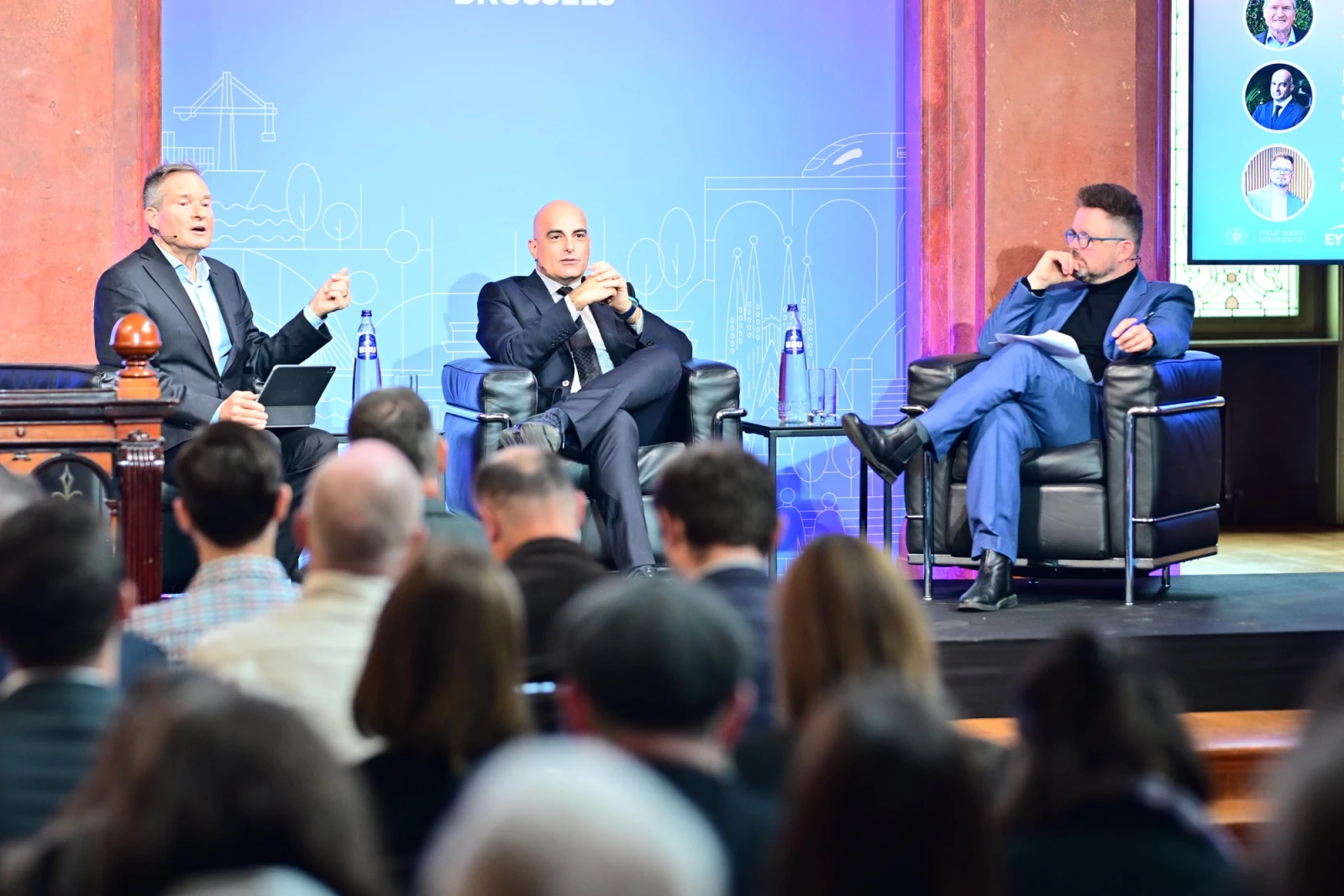
This very topic was one of the central themes at a conference in Brussels in mid-October, where an EY-Parthenon study on Philip Morris International's (PMI) contribution to the European Union's economy from 2021 to 2025 was presented. The discussion went far beyond the metrics of a single company: the focus was on Europe's ability to create predictable conditions in which businesses can plan for growth and invest, while ensuring that consumer interests remain protected.
Five key findings from the study "Philip Morris International's Economic Contribution to the European Union":
● Nearly €343 billion in total contribution to the EU economy between 2021 and 2025.
● €22.3 billion in spending with European suppliers and €27.4 billion invested across PMI's European operations, strengthening industrial capacity and supply-chain resilience.
● €39.5 billion in exports, reinforcing Europe's position as a manufacturing and export hub.
● Around 164,000 jobs supported in 2025, including nearly 22,500 direct jobs and
● employment across suppliers and the wider economy.
● €422 million invested in R&D across Europe, complemented by approximately €2.2 billion in R&D activities in Switzerland, building scientific and innovation capabilities for the future.
The study, covering the period from 2021 to 2025, demonstrates the scale of PMI's contribution within the European Union, as well as the opportunities that have been realized through its transformation. The company's impact extends far beyond its own operations to include suppliers, manufacturers, researchers, retailers, farmers, employees, and local communities across Europe.
"Behind the billions in economic contribution there are people. Farmers, manufacturers, scientists, entrepreneurs, retailers, and employees whose work strengthens Europe's economic foundation every day," noted Marco Hannappel, President of Philip Morris International's European region.
At the same time, the business structure is changing: in the fourth quarter of 2025, smoke-free products already accounted for more than half of PMI's net revenue in Europe.
In the foreword to the study, Bart Deckers, a partner at EY-Parthenon Belgium, notes that "The period under review is one of transformation. PMI is reshaping its business towards a smoke-free future, and the change is visible across many aspects of its footprint. From investments in research and development and evolving manufacturing activities to changing export patterns and workforce capabilities, the company's transformation provides important context to understand this report's findings."
Europe serves as PMI's global manufacturing hub for its smoke-free products, producing 100% of the heated tobacco consumables and nicotine pouches sold in the EU, as well as 73% of heated tobacco units and 95% of nicotine pouches sold worldwide.
Marco Hannappel attributes Europe's continued role to the predictability of regulatory decisions: "Without predictability, there can be no investment. And without investment, we will not be able to sustain economic development and the positive impact we have demonstrated." Changes in requirements, taxes, or market access affect the profitability of projects, the choice of production locations, and the technologies in which a company is willing to invest. At the same time, according to Marco Hannappel, the quality of regulation is of paramount importance. "I believe we need a balanced approach. Regulation in our sector is necessary, and we welcome it. However, the key issue is not whether there should be more or less regulation, but how effectively we implement it," he said.
In his view, the risk arises when decisions are made hastily, without sufficient analysis of the consequences: in such cases, it is difficult to determine in advance whether new requirements will stimulate innovation or create additional barriers.
Speaking about new categories of nicotine-containing products, the PMI representative called for taking into account the experiences of countries with different regulatory models. According to him, bans can, in some cases, lead to unintended consequences, including the expansion of the illegal market. He identified the quality of enforcement of existing regulations as another aspect of this problem.
"Many legal retailers suffer from insufficient enforcement of the law and inconsistent application of existing regulations. If we want Europe to remain an attractive destination for investment, we must protect legitimate businesses, strengthen law enforcement, and create more predictable conditions for economic activity," he noted.
At the same time, Marco Hannappel acknowledged that the case for changing the rules should not come solely from manufacturers: "It must be supported by independent scientific research, reliable data, and evidence from real-world practice. This is precisely what lawmakers should use as a guide when assessing whether the current restrictions remain justified."
For Moldova, which is aligning its legislation with EU standards and is interested in attracting investment, this discussion has practical significance. Clear requirements, reasonable transition periods, and consistent enforcement of the law determine the operating conditions for both international companies and their affiliated local enterprises. The government must achieve its health and market regulation goals while ensuring legitimate tax revenues, and businesses must understand the rules under which newly established enterprises will operate and investments will pay off. // 26.10.2026 – InfoMarket.