


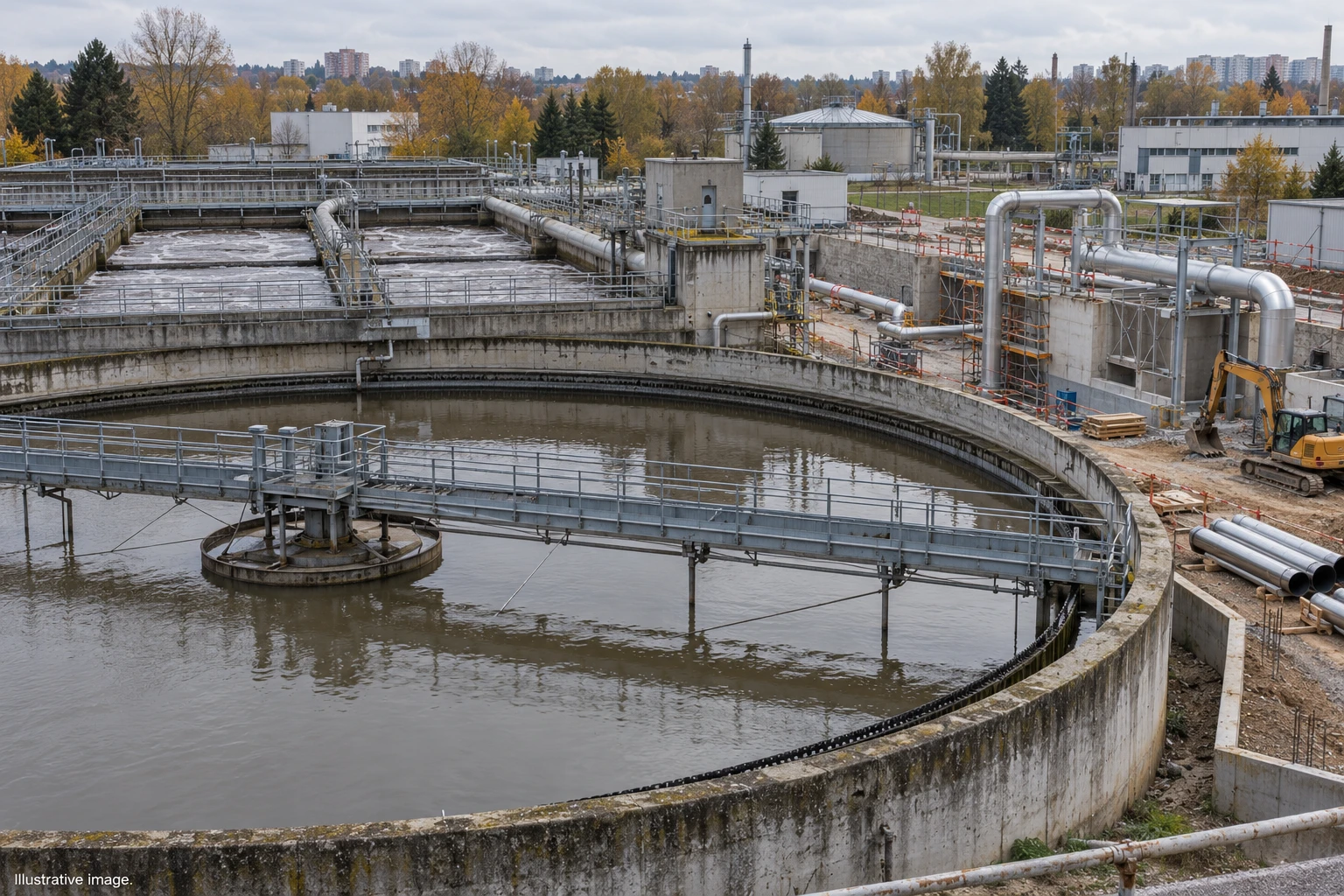
Another contract for the modernization of a wastewater treatment plant has been signed in Chisinau—this time for €8.49 million, or approximately 170.6 million lei. The TURBOENERGY POWER & MASS consortium is tasked with completing the work left unfinished by the previous contractor, ensuring the integration and testing of the equipment, and commissioning the facility. Behind this decision lies a history spanning nearly three decades: international loans, renovations, changes in contractors, the launch of individual units, and repeated promises to rid the capital of unpleasant odors.
The history of the current renovation cannot be reduced to a single, continuous repair project. Over the years, designs and technologies have changed; some equipment has indeed been replaced, and the facilities have continued to operate. However, the completion of individual phases did not provide a comprehensive solution to the problem, and the authorities' promises often went beyond the specific work that had actually been carried out.
The EBRD approved the international program to restore Chisinau's water supply and wastewater systems back in November 1997. Even then, the objectives included reducing pollution in the Bic and Dniester rivers, improving sewage sludge treatment, and reducing odors and energy consumption. The program also covered water distribution networks, pumps, and metering devices. In other words, the problems the city is addressing today were identified nearly 30 years ago.
In 2002–2003, the plant underwent a renovation of its aeration tanks—biological treatment facilities—and upgraded its air supply systems and pumping equipment. According to a project description published in a trade journal, the initial contract with the Czech company was canceled, after which the work was carried out by a consortium consisting of Skanska East Europe Oy and "Ekopolymer." According to the contractor, the renovation took nine months, and in November 2003, the results received a positive assessment from Apă-Canal management and bank representatives. Even then, the story already included both a change in contractors and a report on the successfully completed work.
Nevertheless, the issue was soon discussed again at the highest government level. In November 2005, at a meeting at City Hall attended by President Vladimir Voronin, Prime Minister Vasile Tarlev, and the capital's leadership, the need for the prompt restoration of the wastewater treatment plant was discussed. In 2006, Acting Mayor Vasile Ursu estimated the cost of renovating the existing facilities at €123 million and announced that investors were being sought.
In May 2007, the InfoMarket agency reported on the official launch of a new reconstruction project. Its preliminary cost was €148 million, including €53 million for the first phase. The entire project was expected to be completed in four to five years, and officials promised to eliminate the unpleasant odor hanging over the city after the first two-year phase. There were also plans to produce biogas to partially power the plant. However, at the time the project was announced, a contractor had not yet been selected: the tender process was still ongoing. Between the public launch of the project and the start of construction, there were still the bidding process, the contract, and securing financing to be completed.
Two years later, the decision was made to opt for a less expensive solution. In August 2009, the mayor of the capital, Dorin Chirtoacă, visited the plant, where sludge dewatering was being implemented using geotubes—special geotextile containers. Nine million lei were allocated to the project from the municipal budget. Apă-Canal's management described the technology as a temporary measure until funds became available for a major overhaul. At the same time, residents were promised that the odor would be eliminated as early as the summer or fall of 2010.
The next major phase of funding took place in 2013–2014: the EBRD and the European Investment Bank each provided €24 million in loans, while the European Union contributed €11 million in the form of a grant. The €59 million package was earmarked for the modernization of Chisinau's water supply and wastewater treatment systems. In 2017, a €24.24 million contract was signed with the German consortium Passavant Energy & Environment and Ludwig Pfeiffer specifically for the reconstruction of the wastewater treatment plant and a new sludge treatment line. The work was scheduled to take 900 days (about two and a half years).
In February 2019, two centrifuges for sludge dewatering were officially launched at the plant. The investment totaled approximately 16 million lei. Ruslan Codreanu, the acting mayor who attended the event, once again linked the launch of the new equipment to relieving residents of the unpleasant odor. However, later that same year, the situation required intervention by Maia Sandu's government: the relevant ministry was tasked with monitoring the plant's operations, ensuring sanctions were imposed on violators, and exploring funding opportunities for businesses to build their own treatment facilities. The problem depended not only on the city's infrastructure but also on the pollutants entering the sewer system.
Meanwhile, the major reconstruction project faced a new obstacle: in late 2021, one of the members of the German consortium entered insolvency proceedings. The work remained unfinished, and a new contractor had to be found. In March 2024, the municipality reported that the first phase was 90 percent complete. At the same time, Deputy Mayor Irina Gutnic explained the need to revise the second phase: the plans, which were based on conditions from 2014–2015, called for a level of gas consumption that, given the changed prices, made the project economically unviable. The delays raised questions not only about the completion of construction but also about the cost of future operation.
The current contract should allow this phase of work to be completed. Meanwhile, Apă-Canal confirms that the reconstructed sedimentation tanks, aeration tanks, and other equipment have already been partially integrated into the operational process.
For the city, this new phase should result in verified performance metrics for treatment quality, sludge processing, energy consumption, and operating costs; for residents, it should eliminate the unpleasant odor emanating from the treatment plant. Wastewater treatment plants will always require maintenance and periodic equipment replacement. However, a specific renovation project must have a completion date and ensure the sustainable operation of the entire process chain. After nearly three decades of programs and promises, this is precisely what will distinguish a completed project from yet another chapter in this never-ending story. // 23.10.2026 - InfoMarket.