


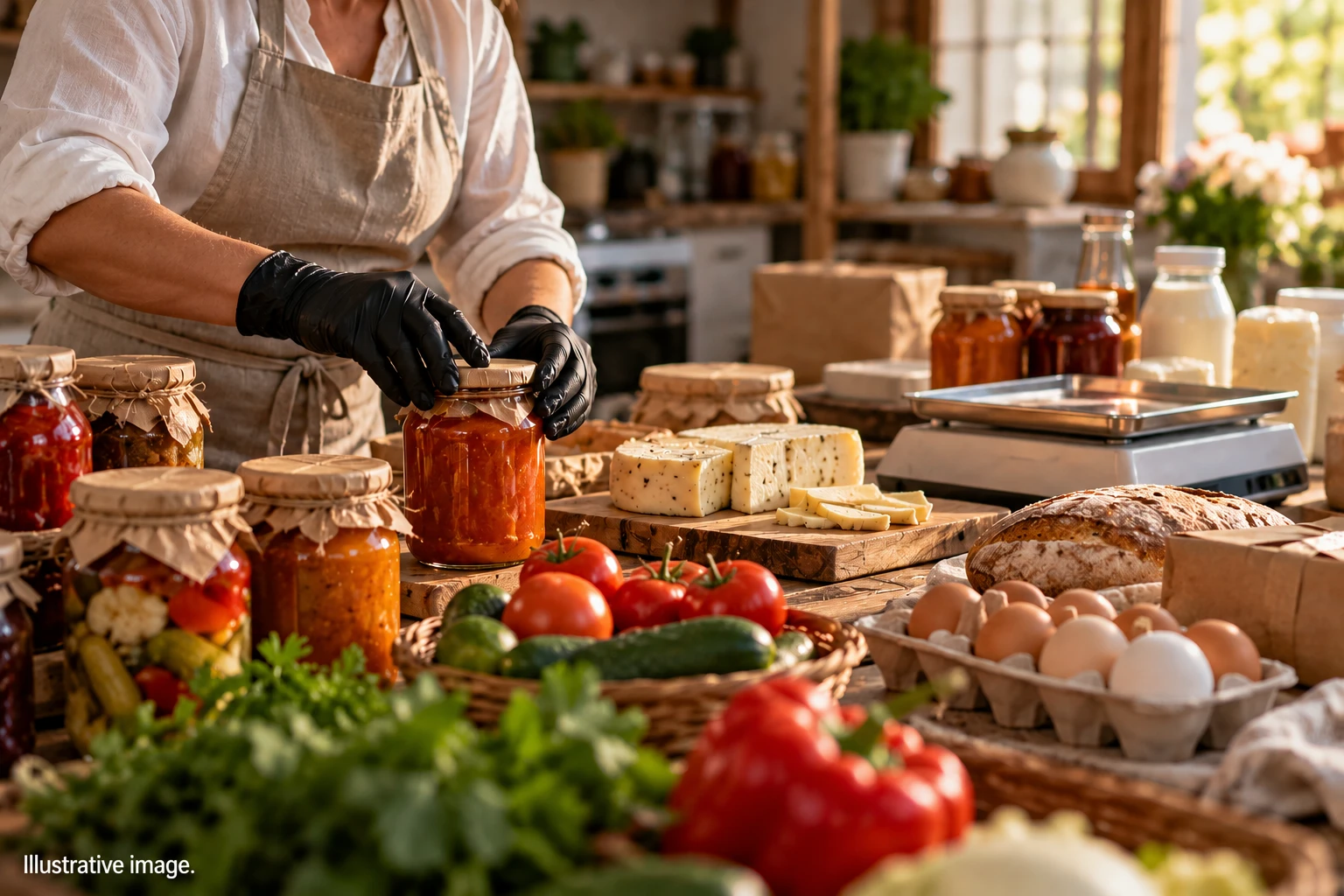
Moldova plans to expand opportunities for the legal sale of homemade food products and simplify operations for small food producers. On October 15, the National Agency for Food Safety (ANSA) released proposals for legislative changes developed with government support. The proposals call for allowing certain types of activities to begin without prior authorization, reducing inspections, and adapting hygiene requirements to the scale of production. The agency intends to continue consultations with business owners and relevant authorities, after which the proposals must undergo the necessary approval procedures. No specific timeline has yet been announced for the adoption of the new rules. For small businesses, this presents an opportunity to reduce initial costs, but it also raises questions about a level playing field with established businesses.
The main change is the transition to a notification-based system for certain low-risk activities. For example, producers of artisanal bread and baked goods will no longer be required to wait for a preliminary opinion from ANSA.
A separate proposal aims to regulate the production of food in home kitchens. Bread, cookies, and certain types of baked goods will be legally permitted to be sold directly to customers, delivered to homes, and offered at fairs. This does not mean that any food product can be produced at home: the list of permitted products and the conditions for their sale have yet to be determined.
Another change is the ability to engage in certain types of small-scale food businesses without registering a limited liability company. ANSA, in collaboration with the Ministry of Economic Development and Digitalization, is developing the relevant regulatory framework. However, this does not mean that entrepreneurs will be exempt from tax obligations.
It is also proposed to adapt hygiene requirements to the scale of production, simplify certain conditions for food transportation, and conduct inspections of low-risk businesses less frequently. The notification procedure is planned to be extended to certain activities of cafés and restaurants. In addition, the authorities intend to make it easier for local producers to supply food to schools and daycare centers, provided they comply with current requirements.
Attempts to lower barriers for small food producers have been made in the past. In January 2025, the government approved special requirements for small producers. According to ANSA, by January 27, 2026, 33 producers had legalized their operations under this mechanism. However, this figure alone does not allow for an assessment of the new rules' effectiveness: to do so, it is necessary to know how many entrepreneurs attempted to take advantage of the simplified procedure and what obstacles they encountered.
The proposed changes could also affect competition. Existing bakeries, pastry shops, and food service establishments have already invested in facilities, equipment, and compliance with health and safety requirements. Home-based producers will be able to enter the same market with lower initial costs. In this situation, it is important to define the boundaries of the simplified regime: permissible product types and production scales.
However, the information published by ANSA does not yet specify all categories of entrepreneurs who will be able to operate under the notification system, nor does it outline the specific requirements for home-based production.
The economic impact of the proposed changes will depend on how accessible the new regime proves to be in practice. If small producers can legally sell their products without incurring disproportionate costs for registration, premises, and equipment, this will create conditions conducive to the development of small businesses. At the same time, however, the government must ensure clear boundaries for the simplified regime so that lowering barriers for some market participants does not result in unequal conditions for others. // 16.10.2026 - InfoMarket.