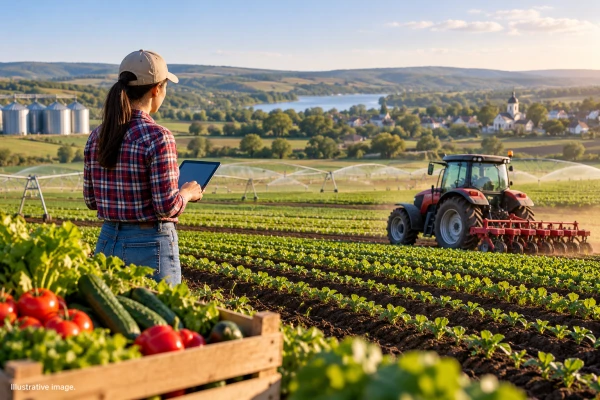
Moldova's irrigation sector needs investments of approximately 3 billion euros, says Ioniță
Irrigation should become one of the main areas of development for Moldova's agriculture; this will require about 3 billion euros — Veaceslav Ioniță
Moldova will introduce clearer rules regarding the onset of fruit production in orchards and other perennial plantings
The government has approved a broad package of measures aimed at the upcoming heating season, while also advancing changes in energy regulation, public procurement transparency and the restructuring of a major state-owned railway enterprise. At the same time, new signals are emerging on EU financing, investment activity and banking policy, with several decisions that could shape the business environment in the months ahead.
In Moldova, scholarships for undergraduate students have increased by at least 40% since September, and the amount of the Category I academic scholarship is now 1,905 lei per month instead of 1,360 lei (+40.07%)
In Moldova, farmers can receive up to 2 million lei from IFAD on favorable terms to purchase agricultural machinery and equipment to modernize their businesses
During the first week of September, the AIPA approved the payment of 3.9 million lei in subsidies to Moldovan farmers
In Moldova, a portfolio of state-owned agricultural plots has been put up for auction, with plans to lease them for a five-year term. The auction covers land in various regions of the country and in Chisinau, and the terms of participation and starting prices for the lots may vary significantly.
Investments in Moldova's automotive and electronics industries have exceeded 350 million euros over the past 15 years, and from 2019 to 2025, Moldovan exports of electrical equipment and components to the EU totaled 3.4 billion euros
Moldova is drafting new regulations governing market access for tractors and other agricultural and forestry equipment: registration and commissioning will now require type approval and a declaration of conformity. The initiative has already passed its first reading, but questions are being raised in parliament about exactly how the oversight system will work and whether it will lead to an increased burden on the used equipment market.
Agrocereale believes that the licensing regime for grain and oilseed imports should not be a political ban, but rather a flexible tool that can be activated or deactivated depending on market conditions. The association points out that the decision should be based on actual production, consumption, and processing needs so as not to put pressure on prices for farmers while at the same time ensuring that processing plants are not left without raw materials.
After three years of continuous decline—from approximately 1.94 billion to 1.39 billion euros—Moldova's agricultural exports resumed growth starting in the third quarter of 2025 and reached 1.79 billion euros - Veaceslav Ioniţă
In Moldova, the parliament has definitively approved a temporary licensing regime for imports of grains and oilseeds; however, by the time of the second reading, the bill had been significantly shortened and amended. The decision has already drawn criticism from the author of the initiative, who warns of risks to local farmers and points to controversial amendments to the control mechanism.
In August, Moldovan farmers received approval for another round of subsidies, the amount of which increased significantly compared to the previous month. The funds are being directed toward several areas of support—ranging from investment projects to compensation for weather-related losses—and the payment structure includes both new applications and recalculations of previously submitted requests.
Two major business associations have put forward proposals to adjust tax policy in the agricultural sector, insisting on maintaining preferential VAT rates for key categories of agricultural products. According to their assessment, the planned changes could complicate producers' operations, increase costs, and affect prices; however, the full version of the article provides details on the controversial rates and the most sensitive product groups.
Loading…