


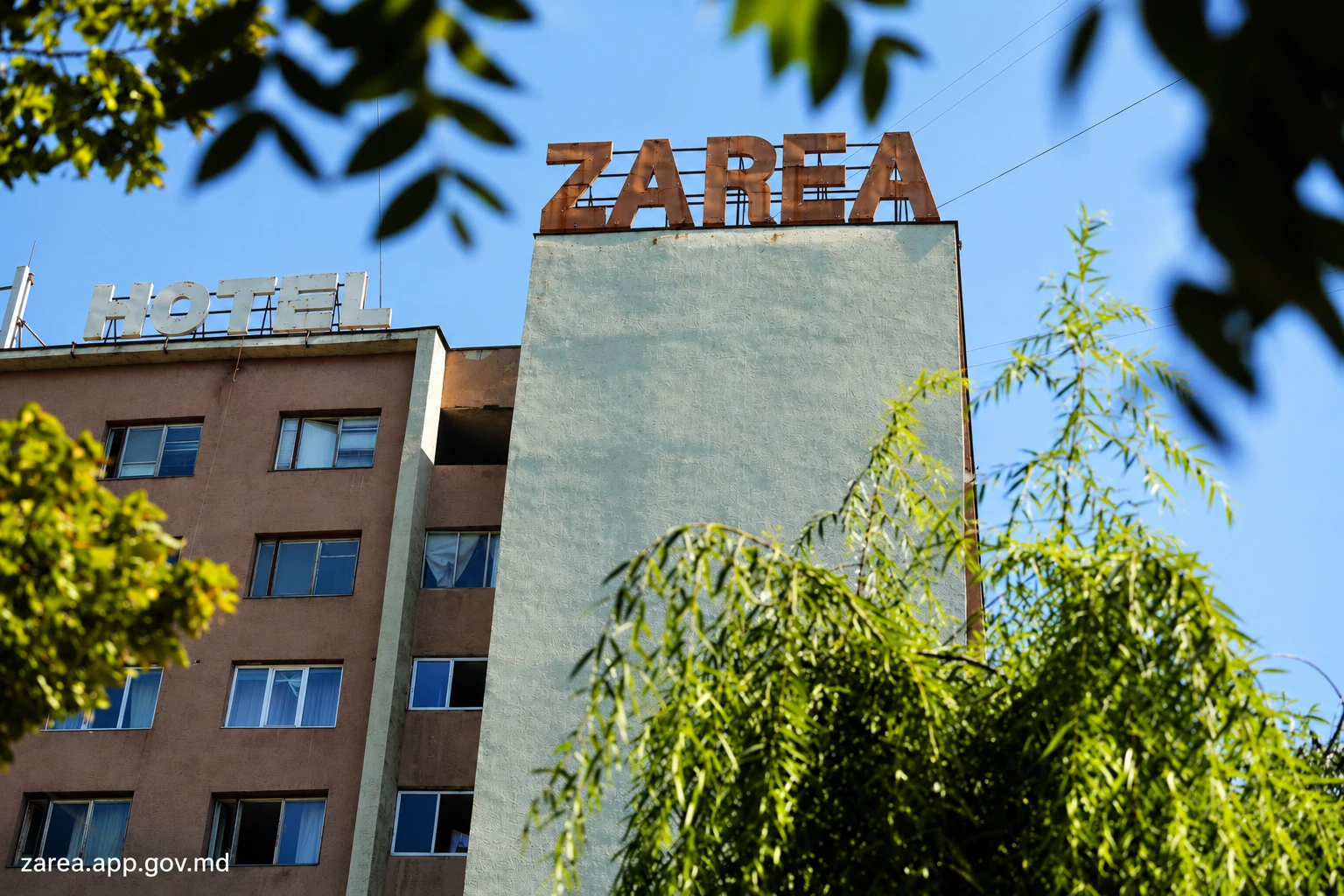
The latest round of privatization of state property in Moldova ended without any results. Not a single bid was submitted for four properties with a total starting price of 122.33 million lei. Among them is the Zarea Hotel in central Chisinau, for which the government had hoped to receive at least 106 million lei. The history of this property is particularly telling: the hotel has been put up for sale repeatedly; in 2016, a buyer was even found, but the deal fell through. Ten years later, the state is once again left without an investor. Representatives of the hotel industry believe that the main reason for the failure is the inflated price.
The Public Property Agency (PPA) put four state-owned enterprises up for privatization back in June 2026: on June 19, a tender was announced for the sale of the Zarea Hotel, the Știința and Lumina enterprises, and on June 26, for the Izomer chemical plant. Initially, bids were accepted until August 19, but the deadline was then extended by two months to October 19. This did not help: not a single potential buyer submitted a bid. On October 20, the PPA announced that all four assets would be put up for privatization again.
However, the lack of bids does not mean there was no initial interest. Back in August, PPA reported 13 potential investors: five were interested in Izomer, four in Zarea, and two each in Știința and Lumina. Some reviewed the privatization documents and visited the facilities. However, none of them progressed from the preliminary review stage to participating in the bidding process.
In other words, the properties attracted the market's attention. However, after reviewing the terms of sale, potential buyers decided not to participate. The reason may lie not only in the price but also in the condition of the property, legal restrictions, and the scope and timing of the requested investments.
The Zarea Hotel, located at 4 Anton Pann Street in Chisinau, has been in operation since 1981. It was registered as a state-owned enterprise in 1992. The complex includes a 12-story building with an area of 6,123.7 square meters, 137 rooms, a conference hall, a café, and a land plot measuring 0.3111 hectares. The property is located in the central part of the capital, near the National Bank and the Parliament.
Despite its location, the hotel has remained unsold for many years. Back in August 2020, Mihai Soțchi, deputy director general of the Public Property Agency, reported that the state had made more than ten attempts to privatize it. However, none of them resulted in a sale.
In 2016, privatization nearly went through. One bid was submitted, and the commission declared an individual the winner, who had offered 35.15 million lei (about €1.6 million at the time) for the hotel complex. However, the buyer failed to transfer the funds by the deadline. The commission extended the payment deadline to July 29, 2016. But after the funds still had not been received by that date, the privatization decision was revoked.
In 2020, the hotel was put up for sale again at a starting price of 29.56 million lei (€1.5 million at the time). The bidding process ran from July 17 to August 18 but did not attract a single bidder.
By this year, the hotel's starting price had more than tripled—to 106 million lei (€5.3 million). At the same time, its estimated market value at the end of 2025, according to PPA, was approximately 103 million lei. However, the property's appraised value and the price an investor is willing to pay for it are not the same thing.
According to Logos Press, representatives of the hotel industry consider Zarea's starting price to be overvalued by about three times. In their estimation, bidding should have started at 30–35 million lei (from €1.5 million). Hoteliers point out that the hotel's location is not in the premium segment, the building lacks parking, access roads are inconvenient, the rooms are in need of renovation, and some of them do not have private bathrooms.
There are also significant restrictions on the use of the property. Under the terms of privatization, the buyer is required to maintain the operation of the civil defense shelter located within the complex and ensure access for maintenance of the transformer substation. These facilities are not included in the property being sold. In addition, the building's renovation potential is limited by urban planning requirements.
According to Logos Press, citing representatives of the hotel industry, the building cannot be demolished, and its use as a hotel must be preserved. If these restrictions do indeed preclude alternative uses for the property, the pool of potential buyers narrows significantly. In that case, the investor is acquiring not so much a plot of land in the center of the capital with the potential for new construction as an operating hotel complex requiring additional investment.
Zarea's financial performance does not look promising either. According to PPA data, in 2025 the hotel generated 9.75 million lei in revenue and total net profit of 28.75 thousand lei. A year earlier, profit stood at 196,690 lei, and in 2023, it was only 7,810 lei. Thus, despite a positive financial result, the business generates virtually no net profit relative to the value of the property being offered for sale.
According to Logos Press, Zarea's occupancy rate in 2025 was only 38%, compared to an average of 70–80% for hotels in Chisinau. At the same time, the hotel operates primarily in the budget segment: the cost of a "junior suite" room is about 700 lei per night. Low occupancy, limited scope for raising prices, and the need for renovations complicate the prospects for a return on investment.
The hotel may present investment interest. However, for a buyer, it is not only the purchase price that matters, but also the amount that will need to be invested after the transaction. If the building cannot be demolished or its use significantly altered, the investment model must be based primarily on modernizing the existing hotel business. To do this, it is necessary to understand the extent to which occupancy rates, revenue, and profit can be increased.
In the current round of privatization, none of the four properties put up for sale were sold, even though they belong to different sectors and vary significantly in price. However, the terms of sale proposed by the government do not align with investors' realistic capabilities and expectations. PPA has already announced its intention to hold a new auction, taking into account the issues raised by potential buyers during preliminary consultations.
The case of Zarea shows that the government can retain ownership of real estate in the center of the capital for decades without ever finding a buyer. Herewith, a formal market appraisal of the property does not guarantee that there will be demand at the set price. If the government expects to receive 106 million lei for the hotel, while industry representatives estimate its investment appeal to be one-third lower, re-announcing the auction without revising the terms may once again—for the umpteenth time—result in a lack of bids. // 22.10.2026 – InfoMarket.