


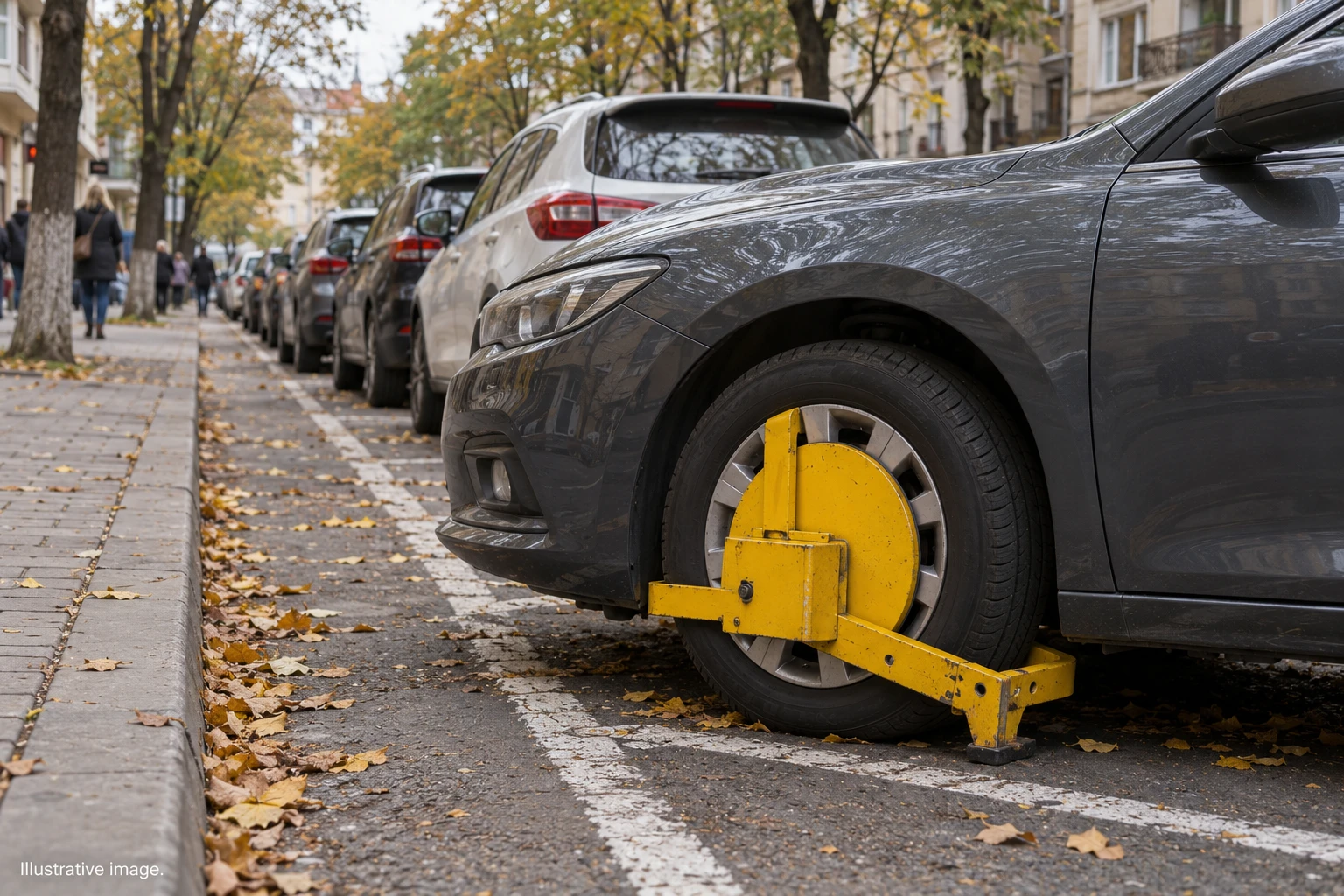
Moldova is drafting new regulations for paid parking: the bill stipulates that local councils will set rates, determine operating procedures, and decide how to use the revenue; furthermore, it allows for the use of wheel clamps in cases of nonpayment if the owner or driver is not present. Parliament passed the bill on sustainable urban mobility in its first reading on October 22. For Chisinau, this is yet another attempt to resolve an issue that has been the subject of strategies, agreements, criminal cases, and disputes over jurisdiction for more than a decade. During this time, the need to regulate parking has persisted, while the number of vehicles has continued to grow.
According to government data, more than 387,000 vehicles are registered in the municipality of Chisinau. The scale of the challenge is clear: the capital must allocate its limited space among traffic, parking, public transportation, and pedestrians. The new bill proposes treating paid parking as a municipal service, with the revenue from it to be allocated primarily toward improving urban mobility.
The history of the current debate began long before this bill was introduced. In 2013, the British firm WSP UK Limited prepared a study on Chisinau's long-term parking strategy as part of a road project funded by the EBRD and the European Investment Bank. In October 2014, the municipal council approved the study and the launch of a public-private partnership. In December 2015, the mayor's office signed a contract with EME Parkleitsystem. It provided for the creation of at least 25,000 paid parking spaces and the transfer of public land to the company's management for 25 years. The municipality was to receive 10% of monthly revenue.
The project was marred by disputes over the terms of the agreement and the allocation of expenses and revenues, and in 2017, it led to criminal investigations and the arrest of officials. The citywide system never came into operation as originally planned. For future attempts, this story left a very specific challenge: to disclose in advance who is financing the development, who is collecting payments, how much the city receives, and what obligations the operator bears.
In 2024, the municipality presented a new regulatory proposal. It proposed zone-based rates: 20 lei per hour in the historic center, 15 and 10 lei in other zones, and 5 lei per hour at Park & Ride facilities. In other words, the city administration linked parking rates to location and demand.
At the same time, the need for new legislation remained a subject of debate. In May 2026, Radu Marian, chairman of the parliamentary committee on economy, budget, and finance, argued that existing legislation already provides local authorities with the means to manage parking. Thus, the debate centered on whether a new law was truly necessary to resolve the issue or whether local authorities could already act within the framework of existing regulations. Therefore, it would be inaccurate to attribute the delay solely to the absence of a law.
The new bill is intended to clarify these mechanisms. However, its adoption alone will not set parking rates in Chisinau or designate the streets where parking fees will apply. The municipality will have to make its own decisions regarding zones, payment times, parking passes, exemptions, and system management.
The economic rationale for paid parking lies primarily in regulating the use of limited space. If a car occupies a spot for the entire workday, it is unavailable to other visitors to a store, institution, or clinic. Hourly rates can encourage shorter parking durations and increase the turnover of parking spaces. However, this effect depends on the rate and compliance with the rules. If it's possible to leave a car on the sidewalk nearby without consequences, a paid parking lot will compete with free, illegal parking.
For Chisinau, it is particularly important to distinguish between different needs. A resident leaves their car near their home overnight; an employee arrives for eight hours; a shopper needs half an hour; and a supplier needs time to unload. Applying the same conditions to everyone will only shift cars from paid streets into neighboring courtyards. Therefore, regulations for residents, delivery zones, and the protection of pedestrian walkways must be developed simultaneously with the parking rates.
Other cities use a combination of tools. In Vienna, the capital of Austria, there is a paid short-term parking system with time limits. In the Romanian city of Cluj-Napoca, hourly parking in the city center is organized separately from annual parking permits in residential neighborhoods. This allows for the specific use of the area to be taken into account, rather than imposing a single system on every parked vehicle.
Another notable example is the Park & Ride facility near Cluj Airport, which opened in January 2025. Drivers can leave their cars there and use a parking ticket for free travel on certain public transportation routes into the city. When it opened, parking for up to 12 hours cost 5 Romanian lei (about €1). Here, park-and-ride provides a practical alternative to driving into the city center: the parking spot is linked to the passenger's onward journey.
For Chisinau, the success of the new system should be evaluated based on the availability of parking spaces, the time it takes to find them, uncluttered sidewalks, and the performance of public transportation. Financial reports should show how much revenue has been collected, how much administration costs, and how the remaining funds are allocated. After more than a decade of discussions, the city needs a functioning service with clear obligations. If the only thing that changes is the driver's obligation to pay, while the parking problem remains, then the problem will simply come with a price tag. // 24.10.2026 - InfoMarket.