


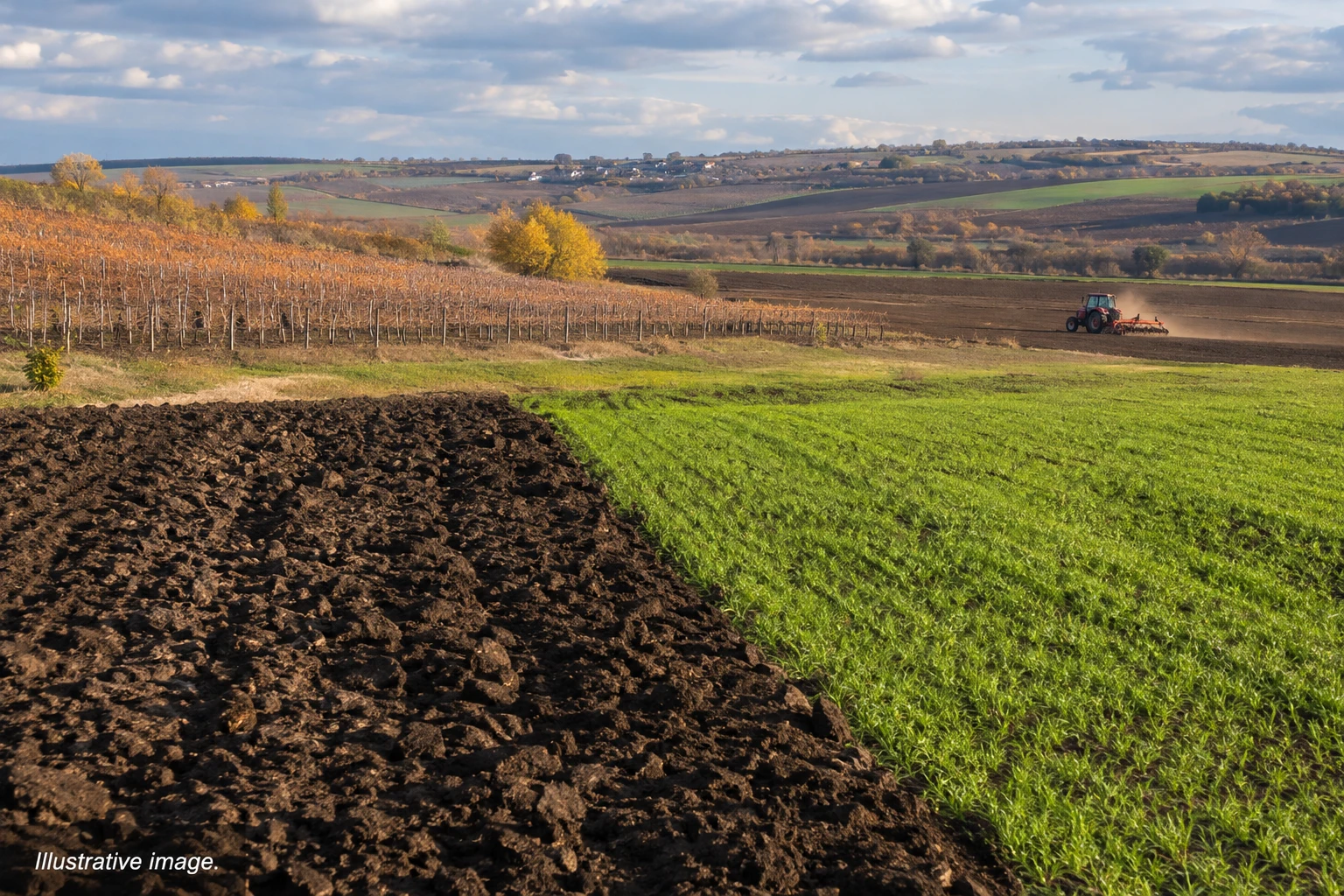
Moldova intends to ask the European Union to maintain the ban on the purchase of agricultural land by foreigners for the first 25 years after joining the EU. Another five years are expected to be set aside for the gradual opening of the market. This is a significantly longer transition period than was granted to the countries of Central and Eastern Europe upon their accession to the European Union. Thus, a country interested in attracting foreign capital intends to restrict foreign investors' access to one of its economy's key resources for decades.
Moldova's negotiating position on Chapter 4, "Free Movement of Capital," was presented by the Ministry of Agriculture and Food Industry on November 20 at a meeting with representatives of industry associations and foreign investors.
During the first 25 years, the plan is to maintain existing restrictions while simultaneously developing agricultural lending, supporting small agricultural enterprises, and improving local farmers' access to land resources.
Over the following five years, the plan is to gradually open the market to European Union residents directly engaged in agricultural activities, provided they obtain prior authorization or meet residency requirements. After the transition period ends, liberalization will continue, with the possibility of maintaining certain safeguard mechanisms.
For now, this refers to Moldova's negotiating position, which has not yet been agreed upon with the European Union.
European experience shows that Moldova's concerns are not unique. Upon joining the EU in 2004, the Czech Republic, Hungary, Slovakia, Estonia, Latvia, and Lithuania were granted a seven-year transition period regarding the acquisition of agricultural land. A similar period was granted to Romania and Bulgaria, which joined the European Union in 2007. Poland secured a 12-year transition period. Croatia, which joined the EU in 2013, maintained restrictions for ten years, taking into account their extension.
Thus, the period during which Moldova is requesting a complete ban to remain in place is more than twice as long as the period granted to Poland. Assuming that Moldova joins the European Union in 2030, the gradual opening of the agricultural land market would not begin until 2055, and the transition period would end in 2060.
One of the economic arguments in favor of the restrictions is the difference in land prices and the financial capabilities of farmers.
According to Eurostat, in 2024 the average cost of one hectare of arable land in the European Union was 15,200 euros, up 6.1% over the previous year. In Bulgaria, a hectare cost an average of 8,700 euros; in Slovakia, 5,800 euros; in Lithuania, 5,600 euros; and in the Netherlands, 96,600 euros.
In Moldova, according to industry estimates for 2024, the price per hectare of agricultural land in the north of the country ranged from 3,000 to 5,000 euros, and in the south from 2,000 to 2,500 euros. Although prices vary significantly depending on the region, soil quality, and access to irrigation, Moldovan land remains relatively inexpensive compared to many EU countries.
Opening up the market could increase demand for agricultural land and raise its value, especially given the prospects for Moldova's integration into the single European market. For local farmers, this would mean additional costs when expanding their operations, while for landowners, it would mean an increase in the value of their assets. A more liquid land market could potentially improve the conditions for using land as collateral for bank loans.
Thus, the economic interests of landowners and farmers interested in acquiring additional plots do not always align.
A ban on the purchase of agricultural land does not imply a ban on foreign investment in the agricultural sector. Foreign companies can carry out projects on leased land and invest in processing facilities, cold storage complexes, irrigation systems, and logistics infrastructure.
However, for horticulture, viticulture, and other projects with a long payback period, land ownership is of particular importance. Investments in perennial crops and irrigation systems increase the value of the land itself. When leasing, an investor must take into account the risks of changes to the lease terms, rent increases, and termination of the lease. Furthermore, the investor cannot use the land parcel itself as collateral.
European legislation allows for the protection of agricultural land even after the transition periods have ended. To this end, proportionate restrictions may be applied to prevent speculation, preserve the agricultural use of the land, and support viable farms.
Such instruments may include a right of first refusal for tenants and neighboring landowners, prior approval of transactions, and requirements regarding land use.
Representatives of Moldova's agricultural sector also advocate for regulated liberalization with clear requirements for investors and priority given to companies that develop production and processing directly in Moldova.
At the same time, a ban on the sale of land to foreigners does not in itself protect small farmers from the concentration of land resources: this can also occur through the acquisition or leasing of land by large domestic companies.
The economic outcome of the proposed transition period will depend not so much on its duration as on how the government uses this time. If, over the next 25 years, Moldova fails to provide its farmers with more accessible long-term financing, effective agricultural insurance, and modern infrastructure, the country will merely postpone the opening of the land market without addressing the root causes of unequal competition for land resources. // 28.11.2026 - InfoMarket.