


In 2025, Moldova exported 98 million liters of wine worth $148 million, while Georgia, having sold 90 million liters abroad, earned $267 million. Thus, despite an 8.9% increase in the physical volume of exports, Moldova earned $119 million—or 44.6%—less than Georgia. The main reason for this gap is not so much the quality or price of the wine itself, but rather the structure of its sales. Moldova continues to export a significant portion of its production in bulk, whereas Georgia's exports consist almost entirely of bottled wine. As a result, Moldovan producers earn less per liter sold, and part of the added value is generated outside the country.
According to an analysis by Ghenadie Ivașcenco, founder of the consulting firm Europolis, Moldova's average export revenue in 2025 was approximately $1.51 per liter of wine, while Georgia's was $2.97. The difference is nearly twofold. This does not mean that Georgian wine is inherently that much more expensive than Moldovan wine. According to the data cited, 63% of Moldovan wine exports by volume consist of bulk wine, whereas in Georgia, its share is less than 1%.
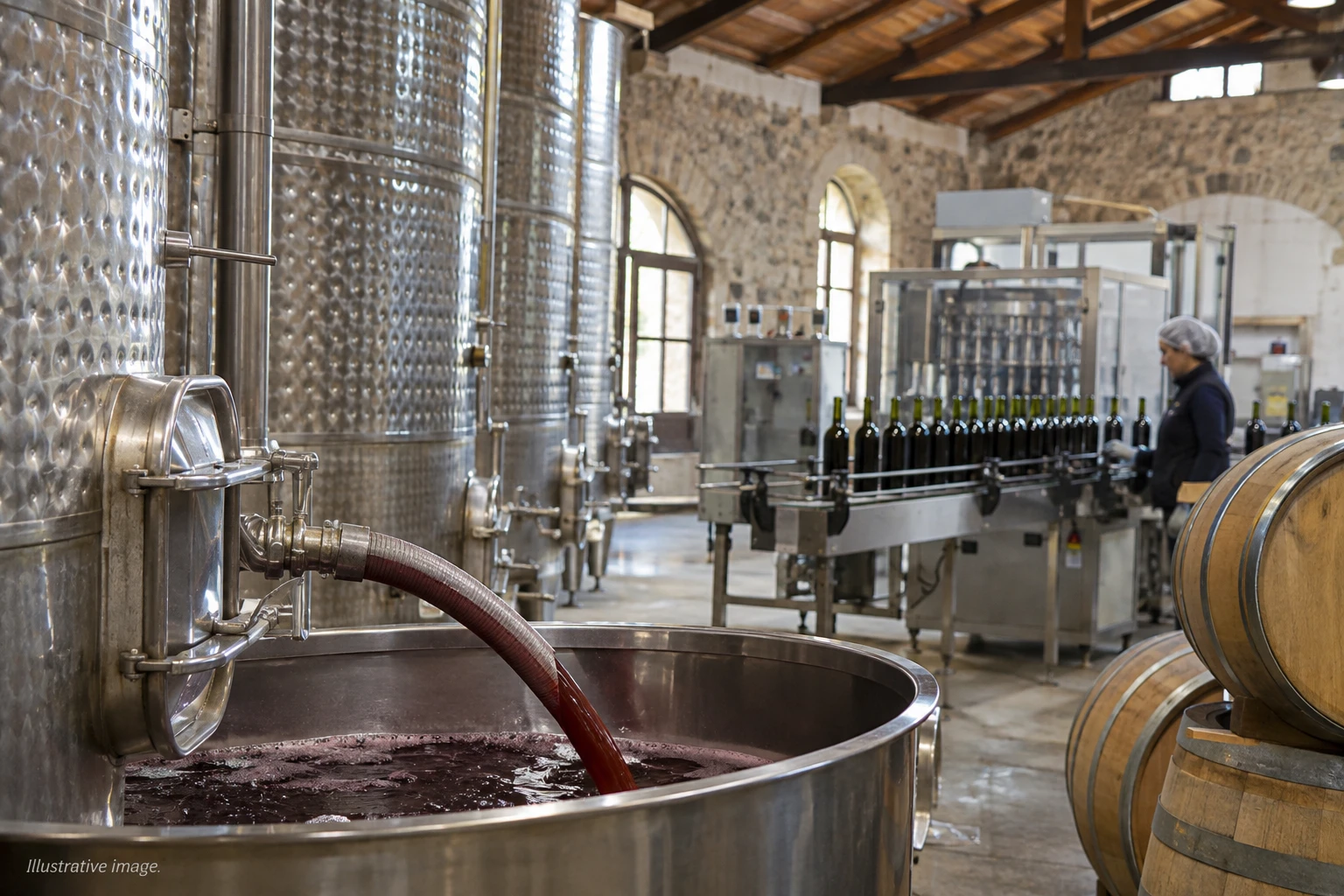
Bulk exports enable wineries to sell large volumes and work with buyers who have their own bottling facilities and distribution channels. However, the revenue from subsequent stages—bottling, promotion, and sales of the finished wine—is primarily earned by foreign companies.
The example of Belarus is particularly telling. According to the study, Moldova supplies nearly 32 million liters of wine there, primarily in bulk, at a price of less than $1 per liter. This represents approximately one-third of Moldova's total wine exports by volume. Part of this production is subsequently bottled locally under other brand names. In effect, Moldovan companies in this segment act as wine suppliers to businesses that independently create the final product for consumers.
However, the situation with bottled wine is significantly different. Over the past eight years, Moldovan producers have significantly narrowed the price gap with their Georgian competitors. Whereas the average export price of Moldovan bottled wine used to be about 60% of the Georgian price, it has now reached 93%, according to an analysis by Europolis.
But even here, the results are mixed. Moldovan bottled wine is supplied to Romania at an average price of $3.50 per liter. In other European Union markets, its price is only about 72% of that of its Georgian counterpart. Consequently, the narrowing of the overall price gap is largely due to performance in the Romanian market, while in other European markets, there is still room to increase export prices.
Historically, the differences between the two countries have largely been shaped by trade restrictions. In 2005, on the eve of the first Russian embargo, exports of Moldovan wine products reached approximately $315 million, with 75–85% of shipments going to Russia, according to estimates at the time. After the ban was imposed in March 2006, the industry experienced a sharp decline. According to the Ministry of Agriculture, exports fell by 63% over the course of the year, and many companies faced serious financial difficulties. In 2013, Georgia returned to the Russian market, while Moldova faced a second embargo and was forced to accelerate its search for alternative buyers.
This reorientation changed the geography of Moldovan exports. In 2017, the European Union accounted for 32% of wine export revenue, and by 2025, that figure had risen to 51%. For the industry, this meant having to meet new requirements, develop its own brands, and build relationships with European importers and retail chains. Moldova gradually reduced its dependence on a single market, although this process was accompanied by a loss of some of its previous sales volumes.
Georgia retained Russia as the main buyer of its wine. In 2025, the Russian market accounted for 60.8 million liters of Georgian wine worth $170.6 million—63.7% of the industry's total export revenue. In January–September 2026, this dependence remained virtually unchanged: Russia's share stood at 63.4%.
If Russia reimposes a complete ban on Georgian wine imports, producers risk facing a crisis similar to the one Moldova experienced in 2006. A market that accounts for nearly two-thirds of export revenue would be at risk. It will not be easy to redirect such volumes to other countries without losing customers or lowering prices. Moreover, this risk is already becoming apparent: in October 2026, there were reports of restrictions on shipments of products from certain Georgian wineries to Russia.
Moldova, on the other hand, has reduced its dependence on the Russian market but has retained a significant share of low-margin exports. Moreover, this structure is characteristic not only of exports to Belarus. According to international trade statistics, in 2025 Moldova exported approximately 9.55 million liters of wine to Georgia itself, worth $5.49 million—an average of $0.57 per liter. It turns out that Georgia not only competes with Moldova on international markets but also purchases significant volumes of relatively inexpensive wine from it.
For the Moldovan wine industry, bulk exports remain an important source of revenue. They ensure full utilization of production capacity, create demand for grapes, and provide sales opportunities for companies that lack the resources to market their products independently in foreign markets. Therefore, completely abandoning such exports is economically unfeasible. However, increasing revenue without increasing physical production volumes is possible primarily through the sale of higher-priced finished products.
This requires investment in bottling, proprietary brands, marketing, and direct relationships with foreign distributors. At the same time, a higher export price does not guarantee greater profits: additional costs for packaging, promotion, and logistics can also be substantial.
The industry is already moving in this direction. According to the National Vine and Wine Bureau, in 2025, exports of still bottled wines totaled approximately 44.8 million bottles, and revenue from their sales rose from $82.6 million in 2024 to $89.4 million in 2025. The average export price increased by 10%. Herewith, bulk wine exports declined by 18% in volume terms, although their average price rose by 12% to $0.74 per liter. The sales mix is gradually shifting toward products with higher export value.
This transition requires time and investment. Moldovan producers must not only produce high-quality bottled wine but also secure a presence in foreign retail chains, compete with well-known international brands, and ensure stable supplies. It is precisely access to the end consumer that largely determines what portion of the wine's value the producer receives.
The two countries face different economic challenges. Moldova needs to increase the share of products with higher added value without losing existing markets, while Georgia needs to reduce its dependence on a single buyer. Over the past two decades, Moldova has significantly diversified its exports but still generates relatively little revenue per liter sold. Georgia earns nearly twice as much, but nearly two-thirds of its wine exports depend on the Russian market. The future performance of both countries will be determined not only by production volumes and export prices, but also by their ability to expand their markets and independently promote their products. //24.11.2026 - InfoMarket.