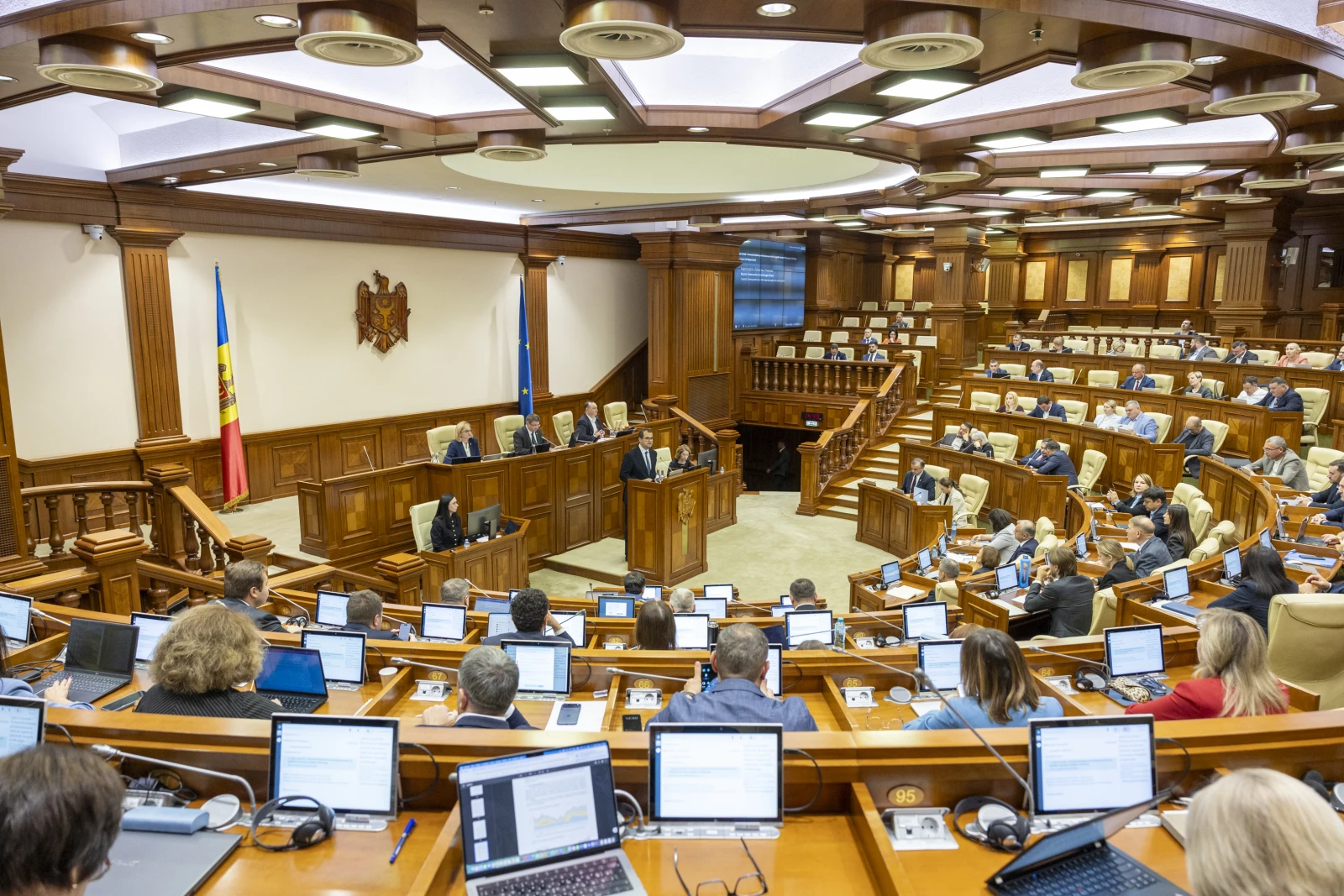
The prime minister made this statement while addressing Parliament and presenting the government's request to Parliament to declare a state of emergency in the energy and hydrological sectors for a period of 60 days, beginning on September 26. Explaining why the government considers this decision appropriate under the current circumstances, Vasile Tofan said that he is not claiming that we will run out of gas, diesel fuel, electricity, or water tomorrow. But the problem is that we are entering the cold season while facing a whole range of serious, overlapping risks—and, in fact, we find ourselves in a "perfect storm" scenario. As the prime minister noted, the first risk is related to gas. For more than half a year now, the crisis in the Strait of Hormuz has been disrupting one of the world's most important hydrocarbon export routes. In addition, the Saudi "East-West" pipeline, which transported 4–5 million barrels of oil per day, was damaged. Meanwhile, in Qatar, attacks on a facility in Ras Laffan have disabled production capacity accounting for about 17% of global liquefied natural gas exports. The consequences of this are directly reflected in prices. In the first half of September, the price of gas on the European TTF hub reached approximately 84 euros per MWh (more than $1,000 per 1,000 cubic meters), which is 50% higher than the benchmark used to calculate the current—and already increased—gas tariff in Moldova. Vasile Tofan emphasized that Moldova has secured contracts to supply more than 90% of the gas we need for the winter, which is good news. However, the cost of a significant portion of this gas is tied to the TTF index—that is, to the market price at the time of delivery. The second risk, according to the Prime Minister, concerns diesel fuel and fuel in general. In the Middle East and Russia, oil refineries and production facilities have been damaged or taken out of service for well-known reasons. Global prices have reached record highs, with diesel prices in the Mediterranean region (according to Platts) exceeding $1,650 per ton. "We already felt the effects of this problem in August. Diesel fuel stocks fell to a level sufficient for less than four days of consumption, and 109 gas stations reported shortages. We intervened. As of today, stocks are sufficient for about 10 days, and the number of stations experiencing fuel shortages has dropped from 109 to 8. This indicates two things. First, that the risk is very real. Second, that if the government has the necessary tools and intervenes in a timely manner, the situation can be stabilized," said Vasile Tofan. He noted that the third risk is related to water resources. Drought is no longer exclusively an agricultural problem; it has become an issue of water supply and energy security. As for the Dniester, in recent weeks the Novodnestrovsk Reservoir has been receiving an average of about 22 cubic meters of water per second. However, it is necessary to maintain a flow rate of at least 60 cubic meters per second, whereas under normal conditions the inflow exceeds 100 cubic meters per second. According to the prime minister, the current situation poses technical risks to the power plant located there. He emphasized that the problem is not limited to the Dniester: water levels in the Danube are also very low. This reduces hydropower generation in the region and affects power plants that use water from the Danube—both hydropower plants and nuclear power plants. The water shortage means a shortage of available energy—and this is happening precisely at a time when we need to increase imports. At the Costesti hydroelectric complex (Prut), electricity generation has fallen by approximately 55% due to the drought. The prime minister explained that water and energy resources are inextricably linked. If large pumping stations are left without electricity for several hours, the energy problem could very quickly escalate into a humanitarian crisis related to the water supply in Chisinau and Balti. Vasile Tofan emphasized that the fourth risk concerns Ukraine and the upcoming winter. As of today, Ukraine is still managing to export electricity to Moldova. "This is a positive development that helps us. However, we cannot base our strategy for ensuring security during the winter on the assumption that this situation will remain unchanged. Ukraine's power grid has suffered enormous damage as a result of Russian attacks," said the prime minister. According to him, the authorities have already seen just how overloaded the system is. For example, on August 5, 100 MWh of emergency assistance from Ukraine was required to maintain balance in the power grid during peak hours. For Moldova, the critical figure this winter is simple: during peak hours, we will need to import 400–450 MW. However, the transmission capacity from Romania is limited to 360 MW. Consequently, the shortfall will have to be covered by imports from Ukraine. "If Ukraine faces a harsh winter, accompanied by further damage to its generating capacity, we will not be able to provide the necessary volumes of emergency electricity imports. That is the problem. These numerous risks are interrelated: The gas situation affects centralized heat supply and electricity generation. Water levels impact the operation of hydroelectric power plants. Electricity is needed to operate water pumps. The situation in Ukraine determines the volume of electricity available for import. And the availability of diesel fuel affects transportation, agriculture, logistics, and, ultimately, prices throughout the entire economy," the prime minister emphasized. According to him, the real risk lies not in the possibility that a single thing might go wrong. The risk is that two or more scenarios could unfold simultaneously, and we would find ourselves completely unprepared to respond to a truly large-scale crisis. Vasile Tofan explained why a state of emergency is being declared rather than simply extending the state of heightened readiness. He noted that a state of emergency allows for additional measures to be taken in situations where the capabilities of the state of heightened readiness are no longer sufficient. In the event of damage to critical infrastructure facilities, the authorities must be able to immediately procure the necessary equipment through a simplified procedure. The prime minister noted that if external shocks affecting fuel or gas supplies become critical, the authorities will need a legal mechanism allowing for the introduction of temporary measures and deviations from existing regulatory or tax rules—for example, changes to VAT or excise tax rates. And if the water supply situation worsens, the authorities must be able to prioritize the supply of drinking water, temporarily restrict its non-essential use, and quickly mobilize pumps, generators, and other necessary resources. According to him, the government must have the necessary tools at its disposal before crisis situations become a reality. // 22.09.2026 — InfoMarket.
Moldova is entering the cold season amid a perfect storm of risks
Moldova is entering the cold season, facing a number of serious, overlapping risks; in fact, it has found itself in a "perfect storm" situation—Vasile Tofan