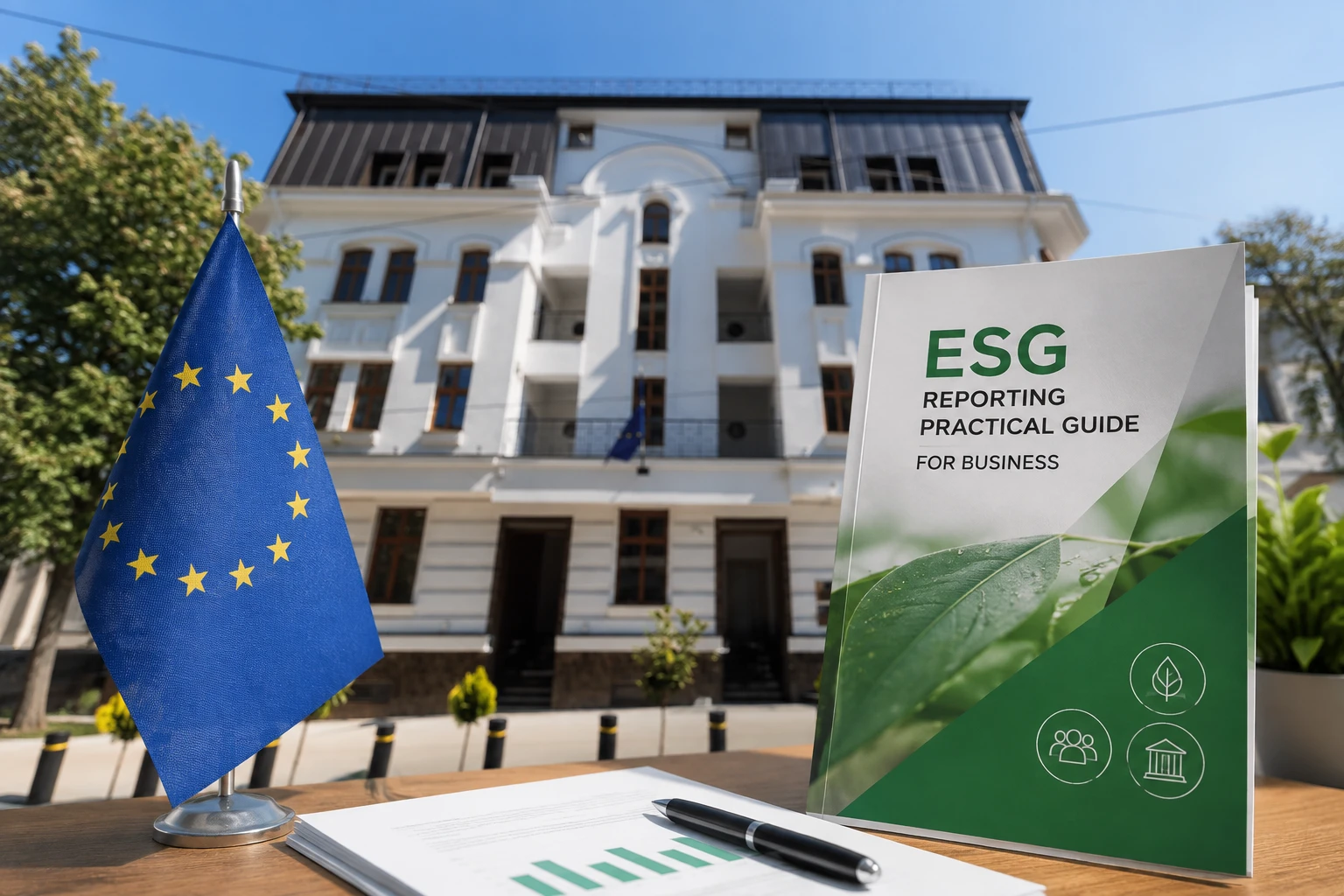
According to the European Union Delegation in our country, the EU supports the "green" transition and the enhancement of business competitiveness in Moldova by promoting ESG reporting in the area of sustainable development — a tool that is becoming increasingly important for companies seeking to attract investment and secure EU funding. ESG covers three key aspects of modern business: Environment, Social, and Governance. It concerns how a company manages its environmental impact, builds relationships with employees, customers, and society, and ensures transparency and accountability in its management system. The first step can be very simple: a company need only compile the data it already has—how much energy and water it consumes, how much waste it generates, how management cares for employees, and what internal policies and rules are in place within the organization. By presenting this information in a concise and understandable report, a company can strengthen trust among banks, investors, and European business partners. For Moldovan companies, ESG reporting is becoming increasingly relevant as the country aligns with European standards. Although preparing such reports remains voluntary for most businesses, market demands are gradually changing. Banks, investors, foreign clients, and business partners are increasingly requesting information on resource consumption, working conditions, anti-corruption policies, corporate governance, and a company's environmental impact. The new Practical Guide to ESG Reporting on Sustainable Development for Moldovan Entrepreneurs explains in detail how companies can begin to collect and disclose information on their environmental, social, and governance activities. // 11.08.2026 — InfoMarket
The EU is helping Moldovan companies adopt ESG reporting and enter the European market
The EU is helping Moldovan companies become more competitive in the European market and has published a Practical Guide to ESG Reporting on Sustainability for them