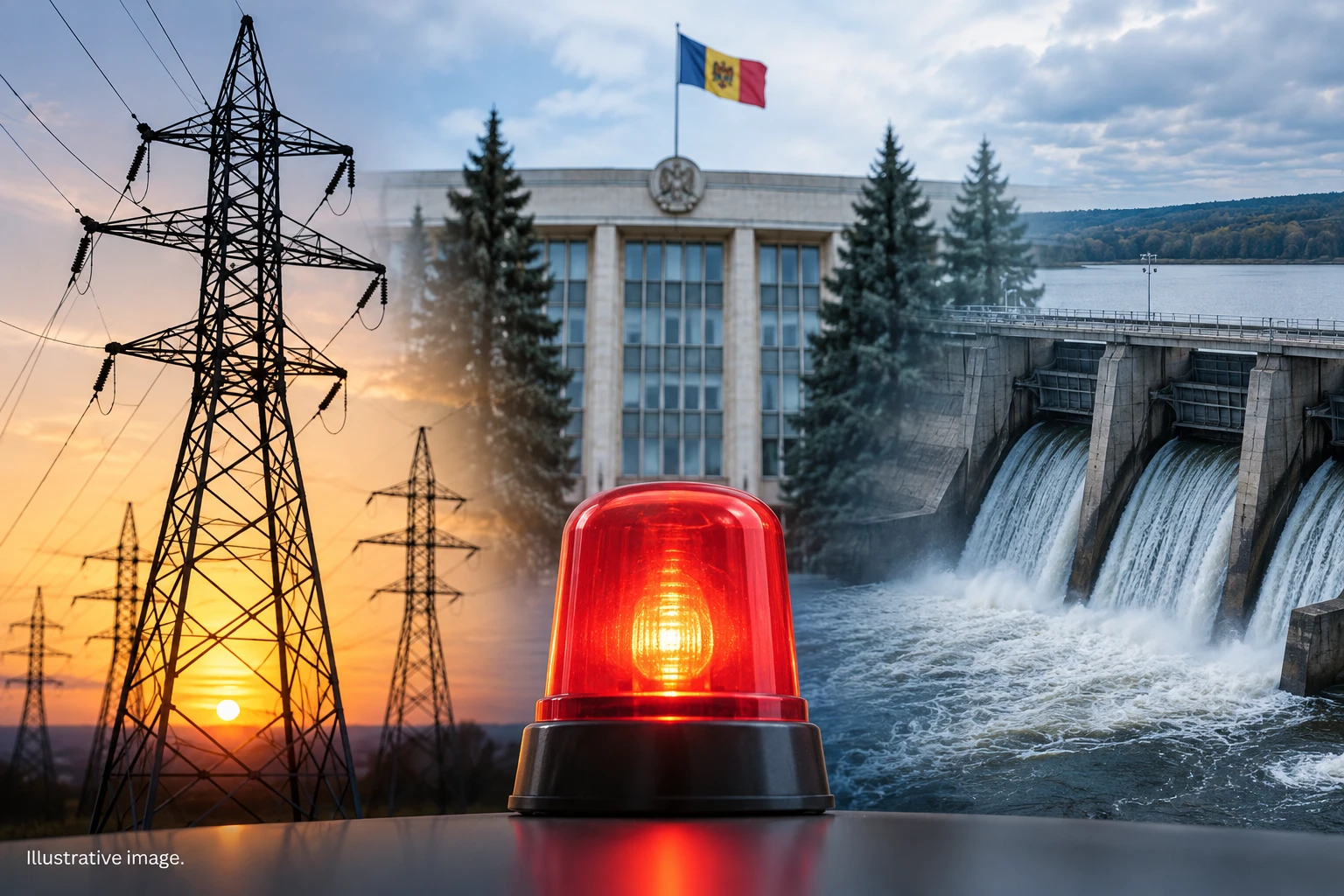
Moldova's President Maia Sandu made this statement at a press conference on Monday following a meeting of the National Security Council, which discussed the impact of the international energy crisis on Moldova and measures to strengthen national energy resilience ahead of the cold season. According to her, in coordination with Parliament, the government, and other relevant agencies, it was agreed that a state of emergency should be declared in the energy and hydrological sectors. Sandu noted that the global situation is becoming more complicated, and the situation in the Strait of Hormuz is blocking access to energy resources for European markets. Energy prices are rising worldwide. At the same time, electricity production has declined following a reduction in river flow due to drought. Despite significant progress made in recent years in the field of renewable energy—its share of total consumption has increased from 3% to approximately 22%, and storage capacity has risen from 0 to 210 MWh; however, Moldova still lacks the necessary capacity, especially during peak hours. The hydrological situation on the Nistru also remains alarming, the president stated. According to Sandu, declaring a state of emergency in the energy and hydrological sectors will allow the authorities to make decisions more quickly in the event of problems with electricity and water supplies, as well as to promptly procure the necessary resources. The relevant authorities will focus on finding alternative sources of electricity, ensure the possibility of emergency and additional purchases from Romania, increasing domestic production and building the necessary state reserves, establishing the necessary gas reserves, and so on. Efforts will also be made to strengthen the protection and preparedness of critical infrastructure facilities against various threats, including military ones. The president stated that regional and international events are putting pressure on Moldova, which will lead to a more difficult winter for citizens. The government will prepare an action plan for various scenarios and guidelines for the public and businesses. One of the measures will be the implementation of a system for promptly alerting the public in crisis situations—through a public warning system or alternative solutions, including digital ones. She also noted an increase in threats posed by Russian drones. While 17 violations of Moldova's airspace were recorded in 2025, there have already been 39 since the beginning of 2026. She listed the measures the authorities are taking to prevent such threats and the associated risks, including working with partners to accelerate the modernization of airspace defense infrastructure. The bill to declare a state of emergency is pending approval by Parliament, which will hold an extraordinary session on September 22. As a reminder, Moldova's energy and hydrological sectors are currently operating under a state of heightened readiness due to risks to energy supply and hydrological drought. // 21.09.2026 — InfoMarket.
Moldova Plans to Declare a State of Emergency in the Energy and Hydrology Sectors
Moldova plans to declare a state of emergency in the energy and hydrological sectors