


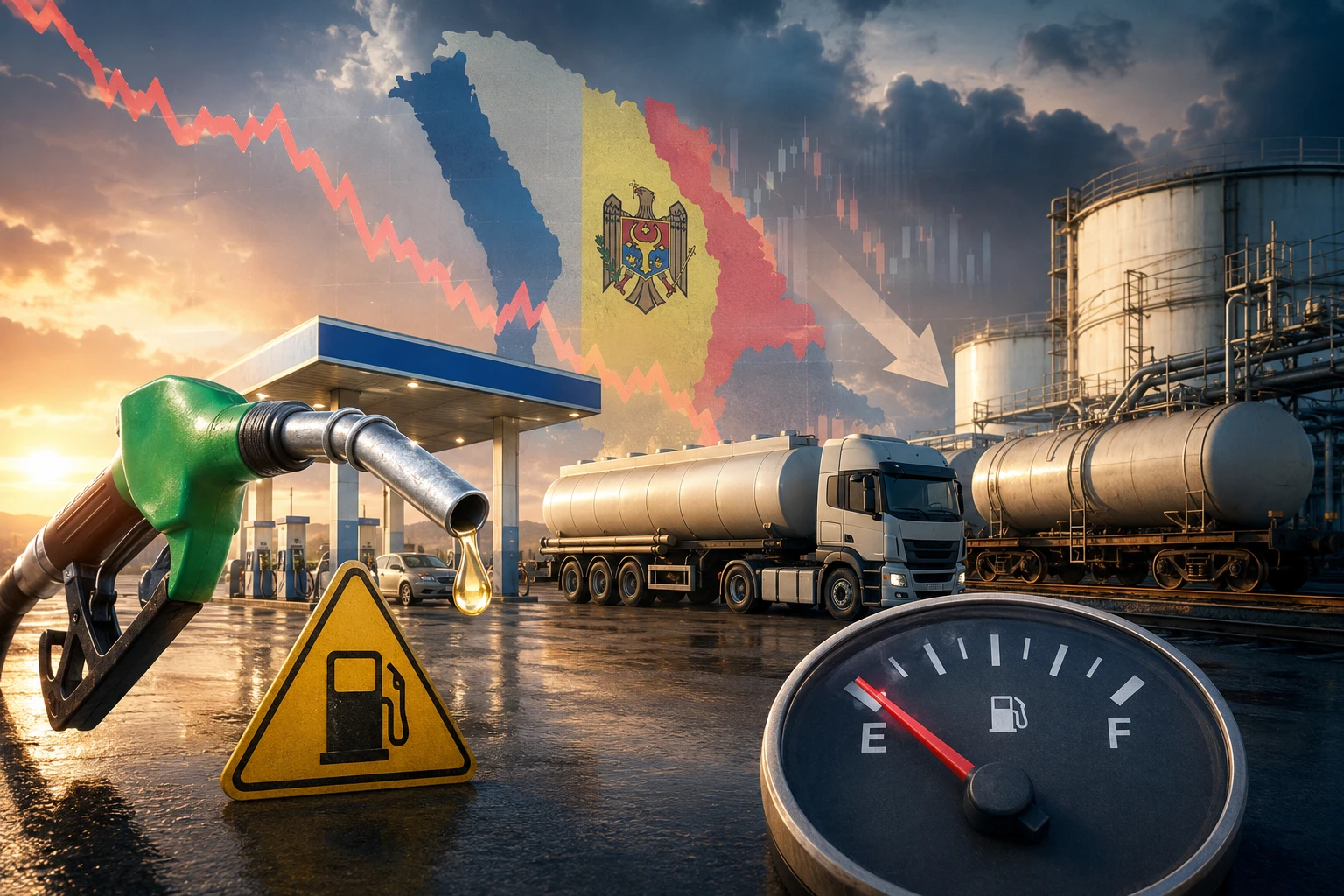
The introduction of a 30-day state of alert in the energy sector was the government’s emergency response to the deteriorating situation in the petroleum products market. At the same time, the authorities changed the mechanism for regulating the diesel fuel market, expedited its import, temporarily postponed the introduction of a new mandatory levy for building strategic reserves, and adopted a number of restrictive measures. All of this indicates that this is not merely a matter of temporary supply disruptions, but rather a test of the resilience of the country’s entire petroleum products supply system.
According to the government’s assessment, the situation was triggered by a confluence of several external factors: high volatility in the global oil market, geopolitical tensions, disruptions in logistics chains, operational problems at certain oil refineries in the region, and a reduction in commercial diesel fuel stocks. Under these conditions, suppliers faced difficulties in procuring the necessary volumes of fuel, and some gas stations experienced shortages.
As in most such cases, the main causes of the crisis lie outside the country. Moldova meets virtually all of its domestic demand for petroleum products through imports, so any disruptions among regional producers or in international logistics are felt almost immediately in the domestic market. This is precisely why stable fuel supplies are one of the key factors in the country’s energy and economic security.
The current situation has also shown that commercial reserves of petroleum products are far from always capable of compensating for sudden disruptions in supply. Given the country’s near-total dependence on imports, even a brief reduction in supply quickly affects fuel availability and prices and requires prompt government intervention.
Under these circumstances, the government has focused first and foremost on preventing a further reduction in diesel fuel supplies. The National Emergency Situations Commission increased the permissible markup on diesel fuel for 30 days, thereby maintaining operators’ economic incentive to import it despite sharply rising purchase prices. At the same time, customs clearance procedures were expedited, priority passage was granted to tanker trucks and railcars carrying diesel fuel, its re-export through the port of Giurgiulești was restricted, government agencies were ordered to reduce diesel fuel consumption by 20%, and to prevent panic buying, the sale of fuel in large-volume containers was temporarily restricted, except for agricultural producers.
Equally significant was the government’s decision to postpone for 30 days the introduction of a mandatory levy of 0.48 lei per liter on gasoline and diesel fuel, which is intended to build up emergency reserves of petroleum products. The principle of creating strategic reserves itself has not been abandoned—on the contrary, the authorities view it as one of the key elements of energy security. However, given the existing shortage, the additional financial burden could further complicate the market situation and lead to higher prices for consumers.
The situation has highlighted another problem. Strategic reserves are created precisely to protect the country from such crises, but the mechanism for financing them kicks in at a time when the market is already experiencing a supply shortage and price pressure. Consequently, the government had to temporarily postpone the introduction of the new levy, effectively choosing between strengthening energy security in the long term and the need to stabilize the current market situation.
The agricultural sector may be the most severely affected by the crisis. The diesel fuel shortage arose during the peak harvest season, when demand for it traditionally reaches its seasonal high. Therefore, the authorities specifically provided an exemption for agricultural producers when imposing temporary restrictions on the sale of large volumes of fuel. In fact, this is not only about supporting individual farms but also about reducing risks to the future harvest and the country’s food security.
The current situation has shown that the stability of the petroleum products market is determined not only by the volume of commercial stocks or the speed of fuel delivery. Equally important are the diversification of supply sources, the development of alternative logistics routes, and the availability of strategic reserves that help mitigate the effects of external shocks. As external risks grow, ensuring energy security is becoming not only an industry-specific challenge but also one of the key elements of the state’s economic policy.
Most of the measures adopted are temporary in nature and designed to last 30 days. However, the current crisis has already demonstrated how quickly external shocks can escalate into domestic economic problems for a country that is almost entirely dependent on petroleum product imports. In the long term, the stability of the Moldovan market will be determined not only by the effectiveness of anti-crisis measures but also by the government’s ability to establish mechanisms in advance to protect against such external shocks. // 28.07.2026 – InfoMarket