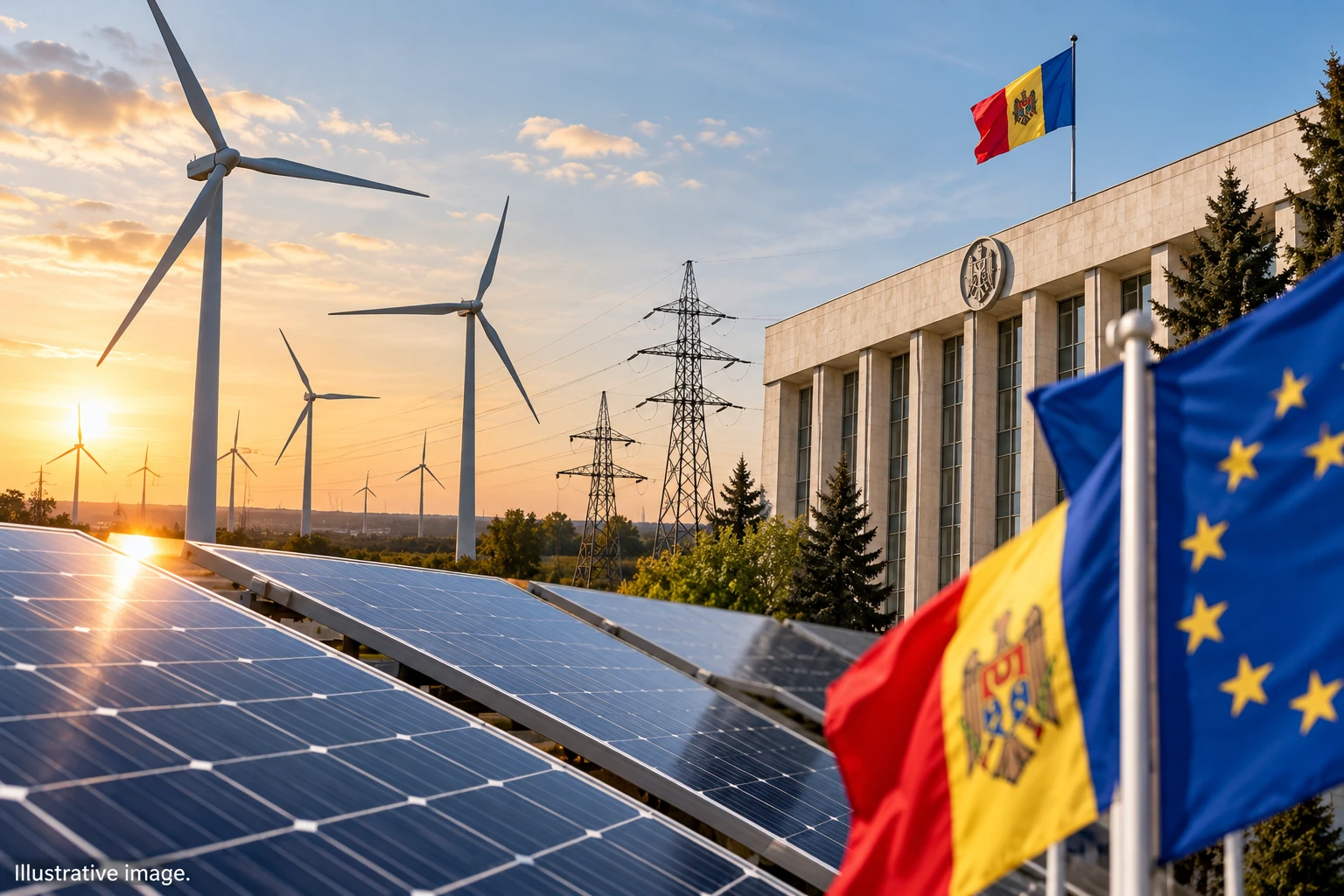
According to the Ministry of Energy, this strategy is the primary government policy document that outlines the development of Moldova's energy sector for the next 25 years. It outlines key strategic objectives aimed at creating a secure, competitive, and sustainable energy system in Moldova that is integrated into the European energy market and capable of supporting the country's economic development and its accession to the EU. The document sets specific targets for 2050: reducing the share of imported energy from more than 77% to 40%; ensuring that at least 85% of domestically generated electricity comes from renewable sources; increasing the share of electricity in final energy consumption from 12% to 65%; and reducing energy intensity from 0.298 to 0.061 metric tons of oil equivalent per 1,000 euros. The strategy is divided into chapters that analyze the current state of the national energy sector across all sectors, the global, European, and regional context, as well as the challenges and opportunities for Moldova. It then presents a vision for development through 2050, as well as general objectives and priority areas for each segment of the energy sector. A significant portion of the strategy is devoted to energy security issues. The document calls for strengthening energy independence through the diversification of supply sources and routes, developing transportation infrastructure and interconnection systems with EU countries, expanding domestic energy generation and storage capacity, and enhancing the energy system's resilience to geopolitical, climate-related, and cyber risks. In the electric power sector, the document outlines measures to create a competitive market that is fully integrated into the European market, modernize electricity transmission and distribution systems, digitizing the system, ensuring cybersecurity, expanding network capacity, and accelerating infrastructure investments so that the power system can handle the growing volumes of energy generated from renewable sources. The strategy places particular emphasis on the development of energy storage capacity and services to ensure grid flexibility, which are considered essential for the functioning of the future energy sector. The development of renewable energy sources (RES) is a key element of the document. In addition, the document promotes the electrification of consumption—including in the transportation, heating, and cooling sectors—as an important component of the energy transition. In the natural gas sector, the strategy assumes that gas will continue to play an important role in ensuring stability and supporting power generation, although its functions will gradually change in the context of the energy transition. The document outlines measures to expand access to diversified supply sources, utilize regional infrastructure, develop a competitive natural gas market, and prepare infrastructure for the integration of low-carbon gases—and, in the long term, — and hydrogen. Energy efficiency is given significant prominence in the strategy, as it is viewed as the most accessible energy resource. The strategy promotes the renovation of the housing stock, improving the energy efficiency of buildings, modernizing heating and cooling systems, reducing energy consumption in the public sector, and encouraging investment in energy-efficient technologies in both the industrial and residential sectors. In addition, the document emphasizes the importance of digitizing the energy sector, implementing smart technologies for monitoring and managing consumption, protecting critical infrastructure, and strengthening cybersecurity as energy systems become increasingly digitalized and interconnected. The strategy also addresses the development of new energy technologies—including energy storage systems, hydrogen and other low-carbon solutions—with the aim of ensuring Moldova's readiness for the technological transformations that will reshape the European energy sector in the coming decades. According to the Ministry of Energy, to achieve the strategy's goals by 2050, a total investment of approximately 43 billion euros (equivalent to 864.3 billion lei at the NBM's official reference rate of 20.1 lei/euro) will be required, distributed as follows: 8.5 billion euros (171 billion lei) for the development of new renewable energy generation capacity; 9.1 billion euros (182.9 billion lei) — for building renovations and the transition to electric heating; 5.5 billion euros (110.6 billion lei) — for the decarbonization and modernization of district heating systems; 17.5 billion euros (351.8 billion lei) – for the electrification and development of "green" infrastructure in the transportation sector; the remaining 2.4 billion euros (48.2 billion lei) for improving energy efficiency, digitalization, hydrogen technologies, energy storage systems, as well as research and development. The figures above are estimates and are subject to periodic review, taking into account the current official exchange rate as well as changes in prices and available technologies. As for funding sources, the funds needed to implement the strategy are planned to be raised through a combination of various sources. The private sector will be the main source of funding for new renewable energy generation capacity (approximately 8.5 billion euros/171 billion lei), as well as a significant portion of the investments in improving the energy efficiency of buildings and the electrification of transportation, which will be driven primarily by the projects' economic viability and the predictable investment conditions provided for in the strategy. State budget funds will be allocated primarily to finance support measures for vulnerable consumer groups and small and medium-sized enterprises, as well as to co-finance public infrastructure projects (renovation of public buildings, electrification of public transportation). Foreign aid, European Union funds, and financing from international financial institutions, as well as instruments such as public-private partnerships or "green" bonds, will supplement the sources of financing, especially for large-scale energy infrastructure projects (interconnections, "smart" grids, hydrogen energy) and energy efficiency programs (the Energy Modernization Fund, the SuperESCO model). Planned domestic budget revenues will be generated primarily through revenue from the carbon tax and emissions trading mechanisms, as well as through other mandatory payments imposed on suppliers and operators in this sector. If external resources cannot be secured in the planned amounts and at the planned pace, there will be a risk of an additional burden on the state budget. To minimize this risk, the strategy will be implemented in phases and aligned with the medium-term budgetary framework. Achieving these goals will yield savings of more than 4 billion euros (80.4 billion lei) by reducing natural gas consumption and cutting operating and maintenance costs by 30%, with estimated annual savings of 355 million euros (7.1 billion lei) by 2030 and more than 1 billion euros (20.1 billion lei) by 2050. In addition, economic modeling results indicate that the transition to a new energy model and the implementation of the strategy will ensure additional annual GDP growth of approximately 2%.// 30.09.2026 — InfoMarket
The Moldovan government has approved a new energy strategy through 2050, with investments totaling 43 billion euros
The government has approved Moldova's new Energy Strategy for 2026–2050, achieving the goals of which will require total investments estimated at approximately 43 billion euros (equivalent to about 864.3 billion lei) by 2050