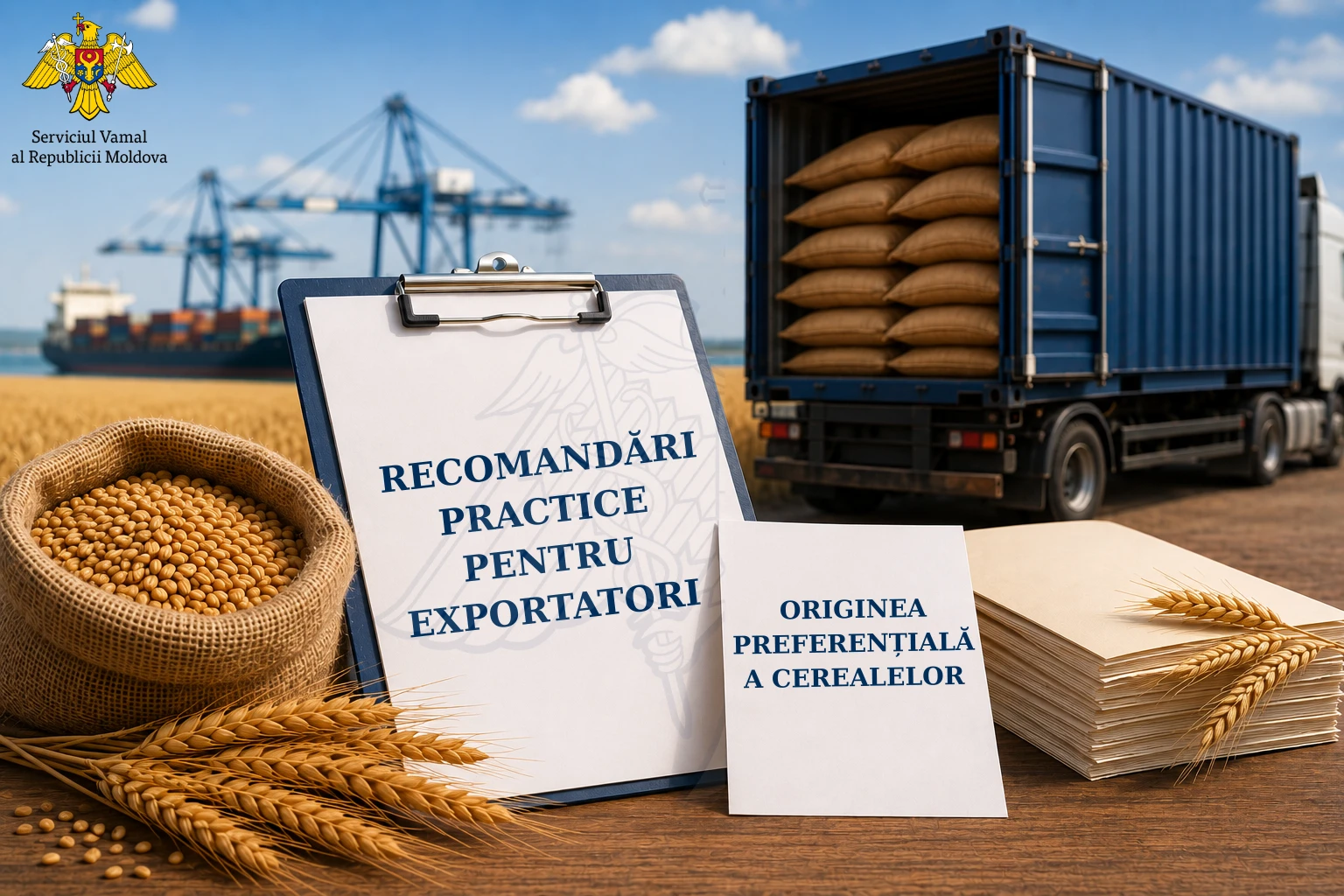
According to the agency, to receive the discounts or exemptions from customs duties provided for in free trade agreements, Moldovan grain exporters must confirm the preferential origin of their products with a EUR.1 certificate or a declaration of origin included in a commercial document. The declaration may be issued by an authorized exporter, or—for shipments valued at up to 6,000 euros—by any exporter. Depending on the situation, the origin of the grain is confirmed by documents from local authorities regarding the harvest, supplier declarations, tax invoices, and documents related to the purchase, production, harvesting, transportation, and storage of the products, as well as data on available stocks and volumes sold. If the exporter is not the grain producer, the supplier's declaration must confirm the link between the producer, the purchased products, and the exported volumes. The documents must ensure the traceability of the goods from production or procurement through to export—including when the grain passes through multiple operators or is stored jointly—and must be retained for at least 3 years. The origin of the goods may be verified even after export, including by the customs authorities of the destination country. In the absence of supporting documents, the importer risks losing tariff preferences. The Customs Service recommends conducting a thorough review of the documentation prior to shipment: verify the information regarding the products and their quantities in suppliers' declarations, shipping documents, and warehouse records. // 21.08.2026 — InfoMarket.
The Customs Service Reminded Grain Exporters of the Rules for Verifying Origin
The Customs Service reminded grain exporters of the rules for confirming preferential origin