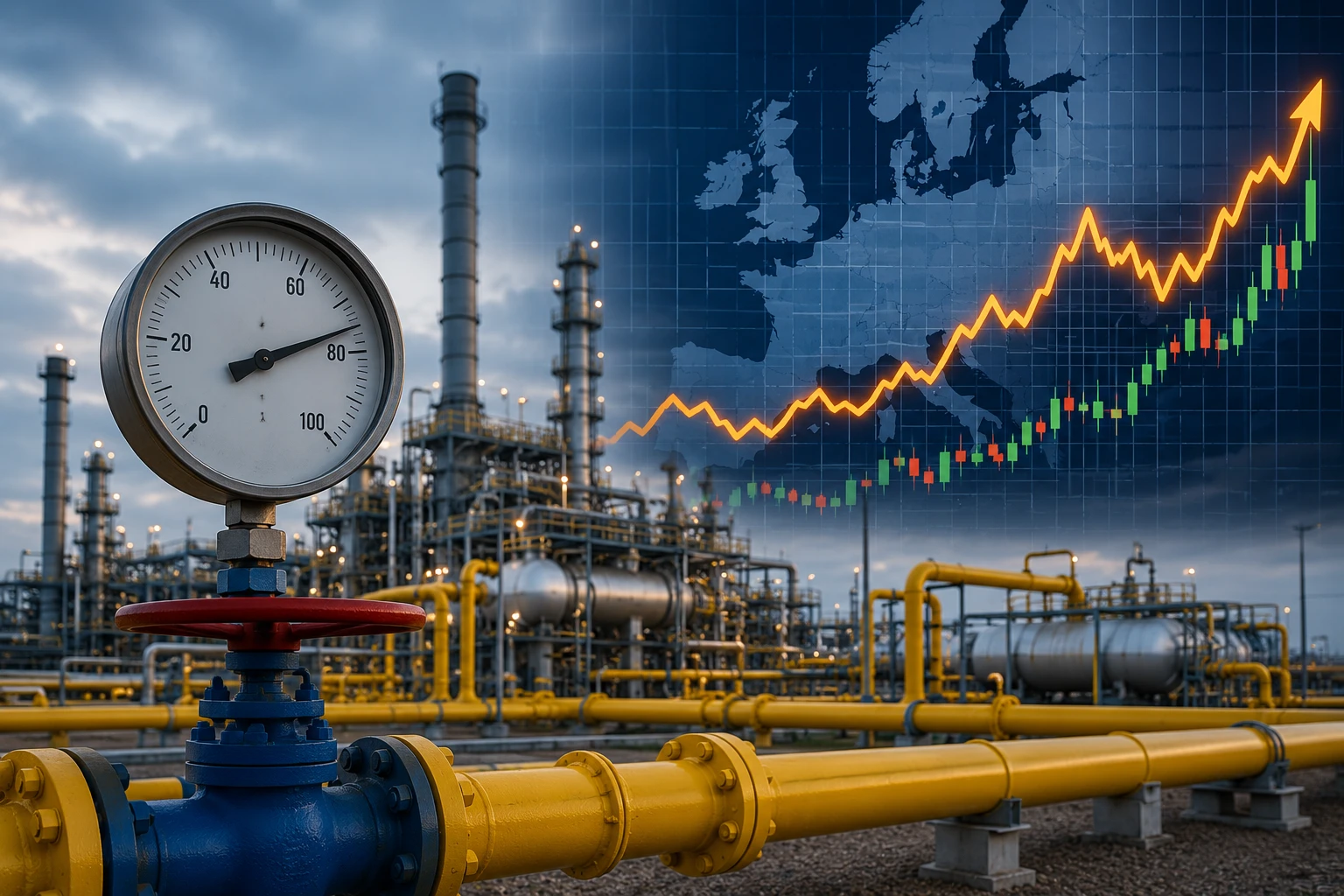
As the state-owned company noted, the situation continues to be influenced by the geopolitical situation in the Middle East and uncertainty regarding the transportation of energy resources through the Strait of Hormuz. An agreement between Iran and Oman to establish a temporary safe route for maritime transport is in its final stages but has not yet been signed, which is sustaining the risk premium in the market. Low inventory levels remain another key factor. European gas storage facilities are about 67% full, which is below the average for recent years of approximately 83% during this period. The situation is even more challenging in Germany, where storage levels stand at about 53.6%, compared to a five-year average of about 80%. The market is also closely monitoring developments in liquefied natural gas (LNG) supplies. Recently, a vessel from Qatar crossed the Strait of Hormuz for the first time since July, and other vessels are being redeployed to the region. These are positive signs, but so far they do not indicate a resumption of large-scale exports. At the same time, competition between Europe and Asia for available cargoes continues to influence the market. Natural gas prices for the coming months remain high. For deliveries between October 2026 and March 2027, they currently stand at around 70–75.2 euros/MWh, with the highest values recorded at the start of the cold season. Energocom notes that it monitors developments in European markets on a daily basis, as well as factors that may affect the cost of purchasing natural gas. It will continue to provide up-to-date information on price trends on European exchanges. // 08.09.2026 — InfoMarket.
Gas prices in Europe continue to rise and are hitting new weekly highs
Natural gas prices on the European market continue to rise, and on September 8, the TTF (Title Transfer Facility) price stood at 75.18 euros/MWh, compared to 69.81 euros/MWhh on August 31 and 73.31 euros/MWh on September 7 – Energocom