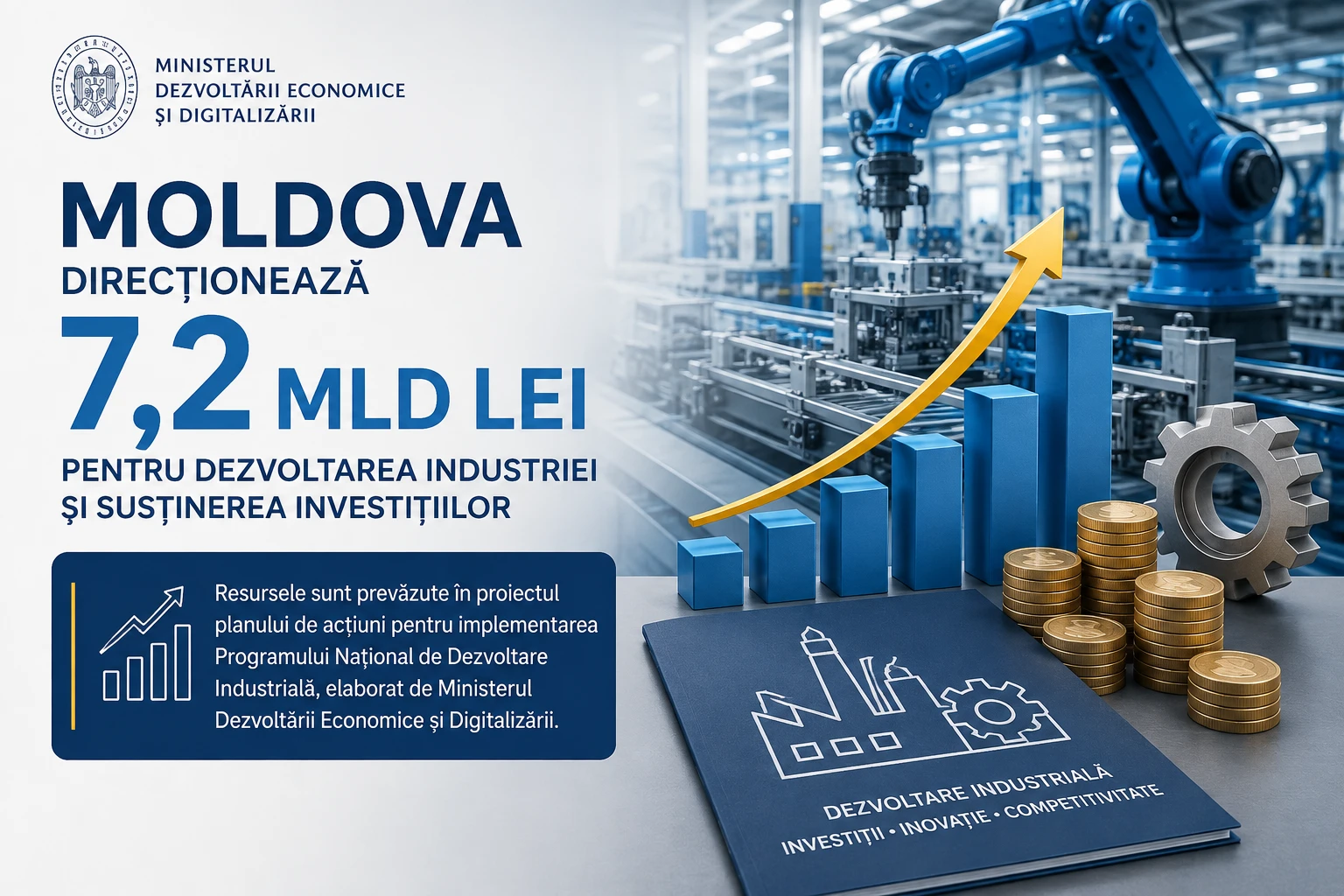
This is outlined in the draft action plan for implementing the National Industrial Development Program, prepared by the Ministry of Economic Development and Digitalization. The document includes 48 measures in the areas of attracting investment, developing industrial infrastructure, workforce training, digitalization, and the transition to a "green" economy. The bulk of the funding—4 billion lei—is earmarked for a regional state aid scheme for investments. By the end of 2028, the plan is to conclude at least 40 agreements with companies. Another approximately 1 billion lei is earmarked for a new support scheme for research, development, and innovation, under which at least 15 contracts are expected to be signed. One billion lei is planned to be allocated to the financial instruments of the Organization for Entrepreneurship Development (ODA) in the manufacturing sector. An additional 340 million lei is earmarked for the "Fund of Funds" mechanism, and 200 million lei is allocated to expand industrial SMEs' access to guarantees and risk-sharing instruments. According to the draft, two multifunctional industrial platforms and two industrial parks are expected to be established in 2027. 300 million lei are earmarked for the development of infrastructure for the four industrial parks. There are also plans to establish a Fund for Business Infrastructure Development and Competitiveness. Under the Creștem ÎMM program, 100 million lei are planned to be allocated for the modernization and digitalization of industrial SMEs, 60 million lei for improving the competitiveness of local manufacturers, and 30 million lei for resource conservation and reducing environmental impact. Another 20 million lei is earmarked for the development of industrial clusters and a network of business incubators. In the area of workforce training, plans call for the approval of at least 20 qualification standards and an equal number of sets of training materials. The modernization of five vocational and technical education institutions will also continue, and companies' expenses for dual education will be reimbursed—50 million lei will be allocated for each of these purposes. According to the plan, the number of students in the dual education system is expected to reach at least 2,000. Dual training is also planned to be expanded to engineering and industrial specialties at universities, involving at least 3 universities, 20 companies, and 50 students. At least 100 specialists are expected to be trained in digital technologies and the application of artificial intelligence in industry (in the healthcare, pharmaceutical, and biotechnology sectors). As part of the "green" transition, the authorities intend to map industrial waste, prepare transition plans for six companies, establish four circular economy centers, and develop programs to support energy efficiency and the implementation of ISO 50001 and ISO 14001 standards. The plan will be funded from the state budget and through support from development partners. The explanatory note notes that industry's share of Moldova's GDP has declined from 40% in 1991 to 12% in 2022, while the manufacturing sector's share has fallen from 15% to 9% over the past two decades. In UNIDO's industrial competitiveness ranking, Moldova ranks 104th out of 153 countries, with high-tech products accounting for only 3% of industrial exports // 04.08.2026 — InfoMarket.
Moldova will allocate 7.2 billion lei for industrial development and government support for investment
7.2 billion lei to be allocated to the development of Moldova's industrial sector in 2027–2028; more than half of that amount will go toward implementing a state aid program for investments