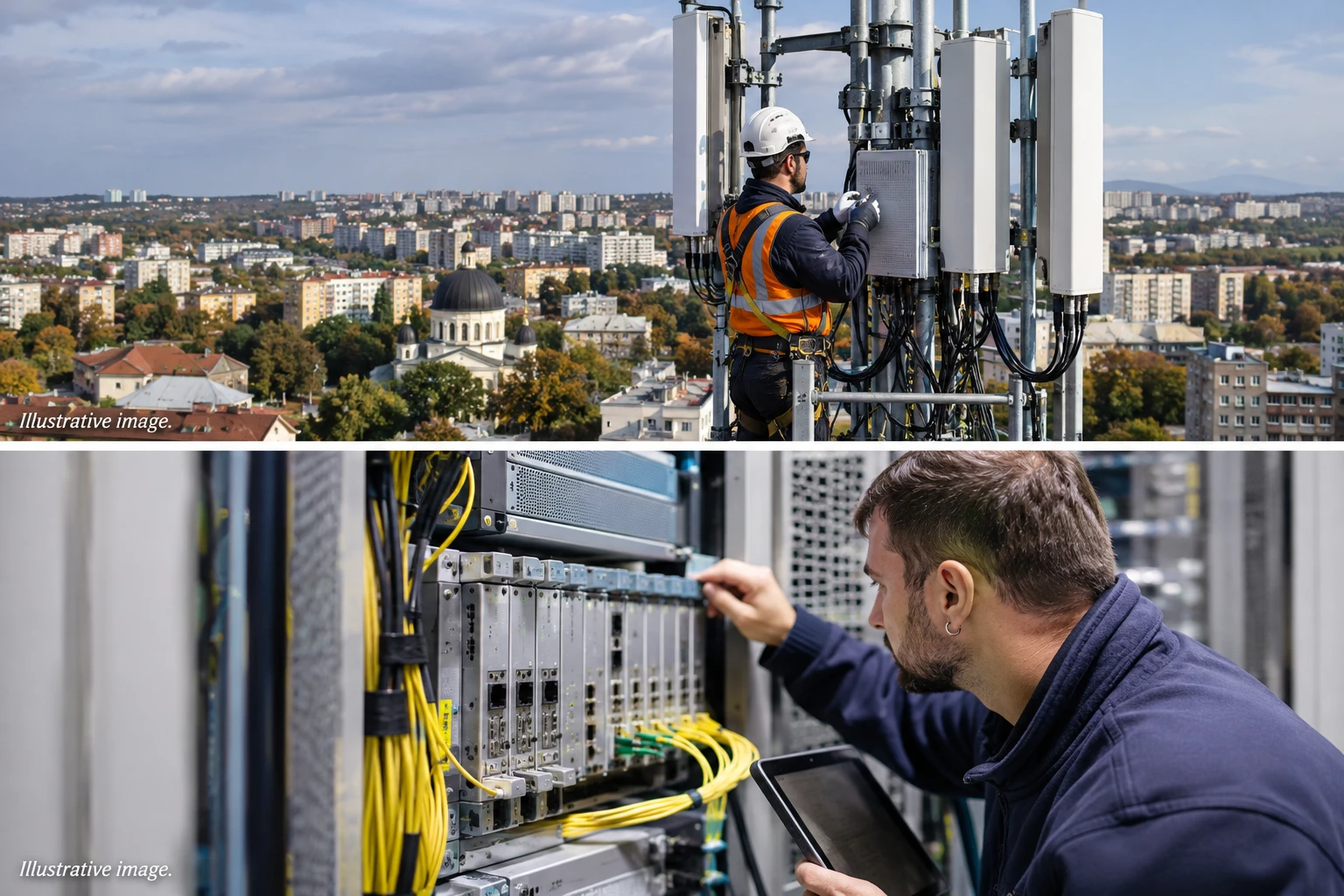
Moldova has presented a draft law on 5G network security that provides for the certification of equipment manufacturers and transition periods for the possible replacement of infrastructure. The explanatory note estimates the potential costs for telecommunications operators at €43–58 million. However, actual costs could be significantly lower, depending on the certification results. Earlier, InfoMarket reported on a statement by the CEO of 17 major European telecommunications companies, who warned that large-scale mandatory equipment replacement could cost up to €40 billion. The European debate has since continued: according to Reuters on 29 September, representatives of EU member states proposed replacing the single 36-month deadline for removing equipment from high-risk suppliers with a more flexible approach. No final decision has been made. The practical consequences of the most restrictive approach have already become apparent in neighbouring Romania. After special rules on the approval of 5G equipment manufacturers were introduced in 2021, Romanian authorities refused to authorise one of the major international suppliers in February 2024. This made the gradual replacement of the supplier's equipment necessary and demonstrated how such decisions can affect operators' investment plans. Moldova's draft law also provides for a manufacturer certification process involving the Cybersecurity Agency and the National Commission for the Control of Strategic Goods. No decisions have yet been made regarding specific manufacturers. If a manufacturer is certified, its equipment will not have to be replaced on this basis. Transition periods are provided for equipment made by manufacturers that do not obtain certification: three years for critical network assets and seven years for radio access network (RAN) equipment. The restrictions are due to take effect on 31 December 2028. According to sources in the telecommunications market, the consultants' initial estimates were based on a scenario in which all affected equipment would be replaced. The actual volume of replacement, however, will depend on the certification results. If all current manufacturers are certified, their equipment will not have to be replaced on this basis. Where only some manufacturers fail to obtain certification, costs could be substantially higher than the initial estimate. The transition periods also matter: they will allow operators to spread any costs over several years and, where technically feasible, coordinate equipment replacement with planned network upgrades. The €43–58 million cited in the explanatory note is therefore not an unavoidable expense for operators. The actual financial burden will depend on the certification decisions and the volume of equipment that needs to be replaced. Until those decisions are made, it is impossible to reliably estimate the cost of the transition or its impact on future investment. //24.11.2026 – InfoMarket.
Moldova proposes new 5G security rules: operators' costs will depend on manufacturers' certification
Moldova proposes new 5G security rules: operators' costs will depend on manufacturers' certification