Moldova declares 60-day state of emergency in the energy sector, effective March 25
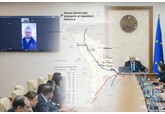
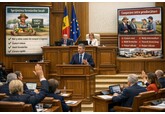
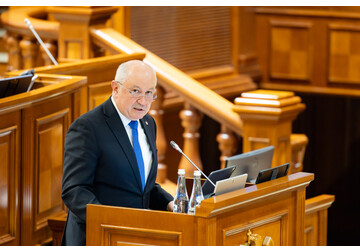
This is provided for in a corresponding resolution passed by Parliament with 72 votes in favor, at the government’s initiative. The introduction of the state of emergency was proposed by the Cabinet of Ministers following the shutdown of Moldova’s main power transmission line—Vulcanesti-Isaccea—as a result of Russian attacks on civilian energy infrastructure in Ukraine. The Vulcanesti-Isaccea power line, which runs through Ukraine, provided up to 70% of Moldova’s electricity consumption. As the authorities note, despite the fact that consumers are currently being supplied with electricity from domestic sources and imports via alternative routes—in particular, through four 110-kV power lines with Romania—the situation is critical. The electricity deficit during peak hours is estimated to reach 350–400 MW. Rolling blackouts cannot be ruled out. Prime Minister Alexandru Munteanu stated at a parliamentary session that declaring state of emergency will allow the authorities to act quickly and in a coordinated manner and take the necessary measures to protect the country’s energy security and its citizens. According to him, this is a necessary, lawful, and preventive measure that will allow the authorities to act quickly, avoid gridlock, and, most importantly, protect citizens. The Prime Minister explained that the government proposed declaring state of emergency rather than state of high alert because this is not a matter of a potential risk, but of an impact that has already occurred and continues to worsen. The energy system has been affected, is operating at its limit, and is exposed to risks that could recur. The state of high alert provides limited tools that do not allow the authorities to intervene in the situation comprehensively and in real time. By declaring state of emergency, authorities will be able to organize and maintain “energy islands” of consumption powered by 110 kV power lines, ensure emergency energy supplies by activating emergency mutual assistance agreements and requesting electricity from operators of adjacent transmission systems, and to intervene promptly in procurement procedures. “We will be able to protect critical infrastructure and work directly with operators and external partners. If necessary, we will prioritize consumption to ensure that vital social institutions and the population are protected,” the Prime Minister stated. He urged citizens to use energy rationally, avoid excessive consumption—especially during peak hours—and, above all, obtain information from official sources. “We have already proven that we can withstand challenges. We have weathered many crises and prevailed. We will handle this situation as well—calmly, responsibly, and with dignity,” emphasized Alexandru Munteanu. During the state of emergency, the government will take immediate measures to secure the energy resources and equipment necessary for the energy infrastructure. If necessary, it will also order the allocation of additional funds to purchase energy and equipment for the energy infrastructure. If necessary, the authorities will order measures to rationalize energy consumption. At the same time, certain economic operators may be required to restrict the supply of goods and services—including imports or exports—to the public, government bodies, and state institutions if this helps to limit or eliminate the consequences of the crisis. Over the next 60 days, energy companies will be authorized to procure, produce, transport, distribute, or supply energy resources throughout the country. The media will inform the public about the causes and scope of the emergency. The acts adopted by the government under the state of emergency will be binding on the heads of central and local government bodies, economic agents, state institutions, as well as on citizens and persons present on the territory of Moldova. //25.03.2026 – InfoMarket.