Businesses point to difficulties in attracting and retaining skilled workers, as well as administrative barriers to hiring employees from abroad
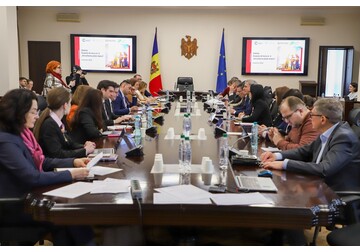
Business representatives reported on the problems faced by enterprises at a meeting of the Labor Market Development Working Group (No. 6) on the platform of the Economic Council under the Prime Minister of Moldova. More than 80 representatives of businesses, relevant associations, and government agencies took part in the discussions, which were organized with the assistance of Expert-Grup independent think tank. Sergiu Harea, President of the Chamber of Commerce and Industry, noted that the labor shortage reported by the chamber's member companies is becoming increasingly acute, requiring a review of public policy instruments in the field of employment and migration, as well as the application of clear, fair legal norms compatible with Moldova's international obligations. The meeting highlighted the labor shortage in some sectors of strategic importance to the economy and listed the administrative and procedural difficulties that businesses face when trying to hire workers from abroad. For example, there are problems with placing workers in dormitories for which the data in the registers of the Public Services Agency has not been updated (e.g., dormitories of the former Agrarian University, where the cadastral extract indicates an owner who does not actually exist and with whom it is impossible to conclude a lease agreement for the accommodation of migrant workers). In addition, businesses have pointed to the long processing times for immigration documents and the length of administrative procedures, as well as the lack of embassies or consular sections for processing Moldovan visas in countries such as Bangladesh, India, and Nepal. State Secretary of the Ministry of Internal Affairs Diana Salcuțan announced the preparation of a new law on the entry, stay, and control of foreigners, which provides for the transfer of more than 10 acts that meet EU requirements. The document aims to simplify the procedures for obtaining the right of residence, digitize services, and facilitate legal access for foreigners to the labor market. Minister of Economic Development and Digitalization Eugen Osmochescu stressed that for sustainable economic growth, the country needs a skilled workforce and closer coordination between the education system, vocational training, and the needs of the economy. According to the National Employment Agency, in 2025, thanks to active employment measures, more than 20,000 people were employed. At the same time, as noted by State Secretary of the Ministry of Labor Felicia Bechtoldt, the employment rate in Moldova remains low at around 59%, and it is necessary to more effectively attract the inactive population to the labor market. The head of the Economic Council Secretariat, Ion Lupan, said that, according to calculations, if productivity in key sectors reached the EU minimum level, Moldova's nominal GDP could increase from €16.8 billion to €25.3 billion (+51%). The meeting participants emphasized that ongoing dialogue between the state and business is an important condition for finding solutions that can reduce the labor shortage and increase the efficiency of the labor market. // 10.03.2026 – InfoMarket.