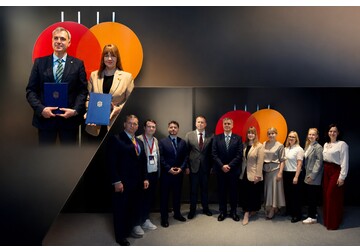
Government and Mastercard, a global technology company in the payments sector, announced the launch of the Digital Country Partnership program in Moldova to accelerate digital transformation
According to the Ministry of Economic Development and Digitalization, the announcement was made during the Moldova Digital Summit 2026. Under this partnership, the Moldovan government and Mastercard plan to leverage the company’s international expertise, cutting-edge technologies, and analytical capabilities to support financial inclusion, business development, and the modernization of public services, thereby helping to strengthen a modern and competitive digital economy. Minister of Economic Development and Digitalization Eugen Osmoschescu noted that Moldova has made significant progress in the digitalization process in recent years and is now aiming to become one of the most technologically advanced countries in the region. He emphasized that the most valuable innovations and the most effective solutions arise from collaboration, which is why the government is building strong partnerships with global leaders such as Mastercard. “This partnership will allow us to accelerate access to digital services, support entrepreneurs and small and medium-sized enterprises, and foster safer and more efficient digital interactions between citizens, businesses, and government agencies. Together, we are building a modern, efficient, and inclusive digital future for Moldova,” stated the Minister of Economic Development and Digitalization. According to him, Mastercard is a trusted partner for governments around the world, leveraging its global network, cutting-edge technologies, and expertise in public policy to support countries in their digital transformation. “We are pleased to strengthen our partnership with the Government of Moldova, a partnership that reflects our shared vision of contributing to the development of the country’s digital future by supporting innovation, expanding access to digital services, and creating new opportunities for participation in the digital economy,” said Irina Untila, Vice President and Country Manager for Mastercard in Moldova. She noted that the partnership will be implemented across five strategic areas aimed at accelerating the development of a secure, inclusive, and competitive digital economy. These areas include the development of the digital economy, the digital transformation of small and medium-sized enterprises, inclusive participation in the digital economy, strategy implementation, research and skills development, as well as the digital transformation of consular services and cross-border government payments. Specifically, as part of the development of the digital economy, the plan is to identify opportunities for cooperation to modernize the regulatory framework necessary for the development of the digital economy and the expansion of electronic payments, including in areas such as cashless payments, digital identification, the EUDI Wallet, and remote onboarding processes. As part of the digitalization of SMEs, support will be provided for the digital transformation of small and medium-sized enterprises through access to scalable, data-driven solutions and tools that enhance their productivity, competitiveness, and resilience. Under the promotion of inclusive participation in the digital economy, the focus is on facilitating access for freelancers and independent professionals to modern payment acceptance solutions, simplifying registration processes, and initiatives aimed at financial education, transparency, and regulatory compliance. In the area of strategy implementation, research, and skills development, support will be provided for the development of data-driven public policy, and the capacity needed to implement initiatives will be strengthened through research, analysis, strategic consulting, and knowledge sharing. With regard to the digitalization of consular services and cross-border government payments, plans are in place to modernize consular and diplomatic services by introducing digital, secure, and transparent mechanisms for tax payment and access to government services. The Digital Country Partnership program establishes a framework for cooperation over the next five years and provides for the identification and implementation of specific initiatives in priority areas with the participation of representatives from the public and private sectors. According to the Ministry of Economic Development and Digitalization, Mastercard has been supporting Moldova’s digital transformation for over 25 years by developing modern payment solutions, promoting financial inclusion, and collaborating with financial institutions, businesses, and government agencies to modernize the national payment ecosystem. The launch of this new partnership marks a new phase in the collaboration between Mastercard and Moldova, laying the groundwork for even closer cooperation to accelerate digital innovation and expand opportunities for citizens, companies, and government agencies. // 22.06.2026 – InfoMarket.