Moldova offers investors a stable, European-style banking sector poised for growth – NBM
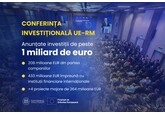
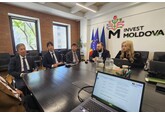
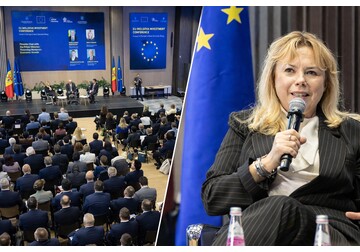
This was stated by Anca Dragu, President of the National Bank of Moldova, speaking at the EU-Moldova Investment Conference in Chisinau, an event organized with the participation of European Commissioner for Enlargement Marta Kos and Moldova's leadership. The forum brought together representatives of the business community, international decision-makers, financial institutions, and European partners for a dialogue aimed at consolidating investment and accelerating Moldova's European economic integration. During a high-level dialogue with Prime Minister Alexandru Munteanu on financing Moldova's economic growth, Anca Dragu highlighted the country's investment opportunities and the role of the financial sector in supporting economic development. The Governor of the National Bank of Moldova emphasized that Moldova is entering a new stage of development, in which financial stability, structural reforms, and convergence with European standards create a solid foundation for investment. "Moldova's financial infrastructure is developing, digital payments are expanding, and the European integration process is yielding concrete results. "Operational accession to SEPA in October 2025 marked a significant step towards deeper European financial integration, contributing to the development of a more interconnected, competitive, and deeply rooted economy within the European space. Harmonization with EU legislation in the area of banking and financial regulation is also advancing at an accelerated pace. Taken together, these developments demonstrate that reforms, financial modernization, and European integration are strengthening Moldova's resilience and creating an increasingly attractive investment environment where private capital enjoys stability, predictability, and effective access to the European market," noted Anca Dragu. She emphasized that the National Bank of Moldova continues the process of convergence with European Union standards, including by recognizing the equivalence of the prudential framework of the European Banking Authority. This process sends a clear signal of Moldova's commitment to strengthening its financial sector in line with European standards. The Governor of the Central Bank of Moldova emphasized that these changes offer investors tangible benefits: a stable financial system, modern payment infrastructure, low cross-border transaction costs, predictable regulation, and opportunities in areas such as lending, green finance, digitalization of financial services, and capital market development. At the same time, Moldova today offers investors a banking sector dominated by European stocks that is sustainable in terms of prudential regulation, profitable, and operates within a regulatory framework that is increasingly aligned with European legislation. As EU accession negotiations progress, the regulatory environment is becoming more familiar, predictable, and increasingly convergent with European legislation, creating better conditions for planning and expanding investments. Moldova's financial market offers important opportunities for deepening lending, developing the capital market, sustainable financing, and expanding digital payments in line with European standards. The sustainable finance taxonomy, approved by the government in April 2026 and harmonized with the European system, creates the preconditions for channeling ESG capital into investment projects in Moldova. At the same time, as Anca Dragu noted, the integration of payment systems and the modernization of the financial infrastructure offer concrete operational advantages to companies operating or planning to invest in Moldova. Cross-border payments in euros have become faster and more accessible thanks to SEPA connectivity, and the development of the MIA instant payment system strengthens the local digital infrastructure. Herewith, the regulatory framework for fintech companies, including open banking, electronic customer verification (e-KYC), and strong customer authentication, creates conditions that did not exist three years ago and increases the attractiveness of the Moldovan financial market. "These transformations are part of a clear trajectory of European integration, which opens new opportunities for promoting investment, developing the financial market, and integrating Moldova into the European Union economy. The National Bank of Moldova remains a supporter of stability, modernization, and European financial integration—the necessary conditions for a more competitive, more sustainable, and more investment-friendly economy,” the NBM President concluded.// 04.06.2026 — InfoMarket