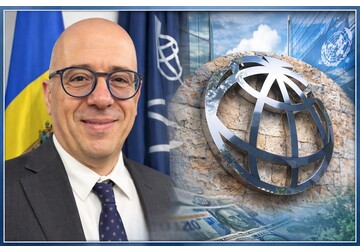
The World Bank will provide Moldova with a $250 million loan to advance reforms aimed at promoting growth, creating new jobs, enhancing resilience, and fostering integration into the EU
Specifically, the World Bank’s Board of Directors approved this Growth and Resilience Development Policy Loan (DPL) for Moldova, aimed at strengthening competitiveness, creating jobs, improving market efficiency and transparency, and promoting economic integration with the European Union. The $250 million loan is the first of two operations based on a thorough economic analysis, a sustained pace of reforms supported by previous DPL loans, and close cooperation with the EU and the IMF. The DPL loan is designed to support the government in building resilience to future shocks and to facilitate the country’s accession to the EU, complementing the EU’s Growth and Reform Agenda for Moldova. It is closely linked to the World Bank’s Partnership Framework with Moldova, which aims to increase formal employment, improve human capital, and boost investments in resilience. “A decisive shift toward growth based on productivity gains and inclusivity will significantly help Moldova close the gap with EU income levels. Moldova now has a unique opportunity to build on the momentum gained through its EU candidate status, and the World Bank Group will continue to fully support the country’s ambitious reform agenda,” said Ulrich Schmitt, World Bank Group Country Manager for Moldova. According to him, the loan will support reforms aimed at enhancing market competitiveness, efficiency, and transparency through targeted measures. These include more competitive and sustainable procurement practices, simplified business registration, as well as increased innovation and consumer protection in the banking sector, while promoting sustainable finance in line with EU taxonomy standards. The program also aims to improve access to preschool education and simplify the formalization of temporary workers. Another set of reforms is aimed at enhancing economic resilience and integration, with a particular focus on Moldova’s integration into EU electricity markets, the modernization and efficiency improvement of district heating, and the integration of sustainability principles into the development of the Trans-European Transport Network (TEN-T) corridor. Since Moldova joined the World Bank in 1992, the Bank has provided over $1.8 billion for more than 45 operations in the country. Current commitments by the International Finance Corporation (IFC) and the Multilateral Investment Guarantee Agency (MIGA), both members of the World Bank Group, include projects in the financial sector, advisory services to the private and public sectors, and risk insurance. // 05.06.2026 — InfoMarket