The financial support for the development of Moldova’s agri-food sector will increase from 2.3 billion lei in 2026 to 5.3 billion lei in 2030, and will total 18.9 billion lei over five years
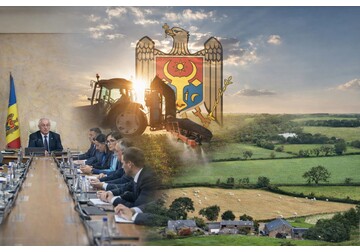
This gradual increase in funding for the sector is provided for in the Strategic Agricultural Policy Program for 2026–2030, which was approved by the government at a meeting on Wednesday. This document outlines the procedures for providing subsidies to farmers and developing the agri-food sector over the next five years. “This is a long-awaited program for farmers—we are moving from annual planning to a clearer, more predictable, and multi-year vision for agricultural development. Farmers need not only support but also predictability. “We want to support investments that contribute to the long-term development of agriculture—modern farms, local processing, irrigation systems, efficient technologies, and competitive rural enterprises,” said Minister of Agriculture and Food Industry Ludmila Catlabuga. According to her, the new approach involves a comprehensive assessment of investment projects prior to the provision of funding. This will ensure that financial support is directed toward projects that most effectively contribute to achieving the goals of agricultural and rural development policy and offer the best value for money. Financial assistance is organized into three categories of eligible support measures: direct payment measures, sectoral measures, and rural development measures. The first category pertains to coupled direct payments. These are forms of support linked to crop production or livestock farming in specific sectors. Support may be provided for the production of seeds of cereals, legumes, oilseeds, industrial crops, forage crops, and vegetable crops; sugar beets; vegetables and potatoes grown in open fields; vegetables grown in protected areas; milk from cattle, sheep, and goats; meat from cattle, sheep, pigs, poultry, and rabbits; young cattle, sheep, and goats; as well as horses, forage crops, and legumes. The second category includes sectoral measures. These relate to areas where support is needed that is more specifically targeted at the production and logistics chain. The program includes measures to develop viticulture, enhance the competitiveness of wine-producing enterprises, plan production and adapt it to market demand, adopt technologies adapted to climate change, develop beekeeping, and involve producers in quality improvement programs. The third category pertains to rural development. This includes investments in the modernization and establishment of crop-based agricultural enterprises, the construction or modernization of livestock farms, subsidies for insurance premiums, support for obtaining agricultural loans, organic farming, investments in irrigation and climate resilience, processing, handling, and storage of agri-food products, cooperation and innovation, support for young and beginning farmers, support for smallholder farmers and family farms, infrastructure related to agricultural enterprises, diversification of economic activities in rural areas, the LEADER program, knowledge transfer, agricultural advisory services, and the modernization of technical and material resources for research and vocational training. Financial assistance will be provided through the National Fund for Agriculture and Rural Development, approved annually by the State Budget Law, with the possibility of attracting funds from development partners. A new element is the integration of the Agricultural Knowledge and Innovation System (AKIS). Thanks to this system, farmers will be able to receive practical support for more effective management of their agricultural enterprises. Consultations will cover economic, technological, environmental, and management aspects, including the sustainable use of water and soil, the proper application of plant protection products, nutrient management, adaptation to climate change, and improving farm efficiency. The Strategic Agricultural Policy Program for 2026–2030 also provides for a monitoring system based on outcome and impact indicators. Each measure will be analyzed annually based on the results achieved. Between 2017 and 2025, the budget of the National Fund for Agriculture and Rural Development increased from 900 million to 1.9 billion lei, while the number of subsidy applications rose from 5,836 to 9,877. By 2026, the subsidy fund will total approximately 2.3 billion lei, of which 628.8 million lei are related to Moldova’s Growth Plan. // 03.06.2026 – InfoMarket.