Moldova has made progress in advancing key reforms, and accelerating structural reforms in the areas of state-owned enterprises, financial markets, and competition will be crucial for boosting productivity and supporting stronger and more sustainable economic growth – OECD
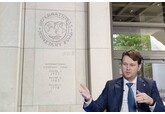
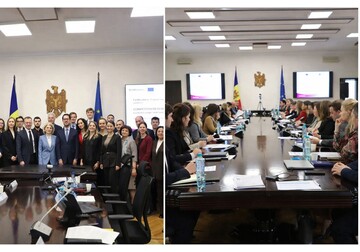
Daniel Quadbeck, Head of the Eastern Europe Division at the Organization for Economic Cooperation and Development (OECD), stated this during a meeting to finalize the results of the Competitiveness Outlook 2026 assessment—a strategic event organized by the Ministry of Economic Development and Digitalization in cooperation with the OECD as part of the project Empowering Trade and Competitiveness in EaP Countries, funded by the European Union with the support of the consulting firm Civitta. The meeting was co-chaired by Daniel Quadbeck, Head of the OECD’s Eastern Europe Division, and State Secretaries Natalia Selevestru and Oleg Bivol at the Ministry of Economic Development and Digitalization. The meeting was attended by representatives of government agencies, the business community, and development partners to validate the preliminary results of Moldova’s competitiveness assessment. The main objective of the meeting was to present and validate the analysis developed by OECD experts, as well as to strengthen technical dialogue with relevant national stakeholders. Discussions focused on confirming the accuracy of the preliminary results, identifying data gaps, and supplementing the analysis with updated information, as well as on identifying priority reforms necessary to bring the regulatory framework into line with European and international standards. Natalia Selevestru noted that assessing Moldova’s competitiveness in cooperation with international partners is an important tool for justifying effective public policy and accelerating the process of European integration. According to her, it is important to use the results of these analyses to guide reforms toward achieving concrete outcomes for the economy and citizens. The analysis covers aspects related to investment policy, the functioning of financial markets, the management of state-owned enterprises, and competition policy, as well as transport infrastructure, integration into global value chains, employment, and skills development. Preliminary results highlight significant progress toward European economic integration, reflected in the growing orientation of exports toward the EU market. At the same time, experts noted the volatile nature of economic growth, driven by external shocks and structural vulnerabilities, including energy dependence. Daniel Quadbeck noted that Moldova has made progress in advancing key reforms. According to him, further efforts to accelerate structural reforms in areas such as state-owned enterprises, financial markets, and competition will be crucial for achieving productivity gains and supporting stronger and more sustainable economic growth. “Today’s discussion confirms the authorities’ commitment to this program, and the OECD’s competitiveness outlook will support these efforts with concrete recommendations,” said Daniel Quadbeck. In the investment sector, the draft of a new Investment Law, initiated by Moldova’s Ministry of Economic Development and Digitalization, was highly commended; it emphasizes the need to integrate sustainability criteria and to monitor more effectively the impact of foreign direct investment on small and medium-sized enterprises. At the same time, despite the banking sector’s sufficient capital, the development of alternative sources of financing remains limited. “Strengthening the competitiveness of Moldova’s economy depends directly on our ability to implement consistent structural reforms, improve the investment climate, and ensure more diversified access to financing for the business community. In this process, it is crucial to fully leverage the support of international partners and maintain a constant dialogue with the private sector to translate policy recommendations into concrete results for the economy,” said Oleg Bivol. Regarding the management of state-owned enterprises, it was noted that the adoption of a state property strategy is an important step, but the implementation of corporate governance standards and the optimization of the enterprise portfolio must be accelerated. In the labor market, efforts to promote dual education and digitalization were noted, but improved institutional coordination and a reduction in disparities between urban and rural areas are needed. The final recommendations will be included in the full Competitiveness Outlook 2026 report, which is scheduled for completion in the third and fourth quarters of this year. This document will serve as an important strategic tool for consolidating the Moldovan government’s further actions aimed at enhancing the competitiveness of the national economy and advancing the country along the European path. 24.04.2026 — InfoMarket